Zion vs Bryce Canyon: Which Utah Park Fits Your Trip?
Zion and Bryce Canyon are only about two hours apart, but they feel like opposite parks. Here is how they compare on scenery, hikes, crowds, elevation and weather, and which one to choose if you can only see one.
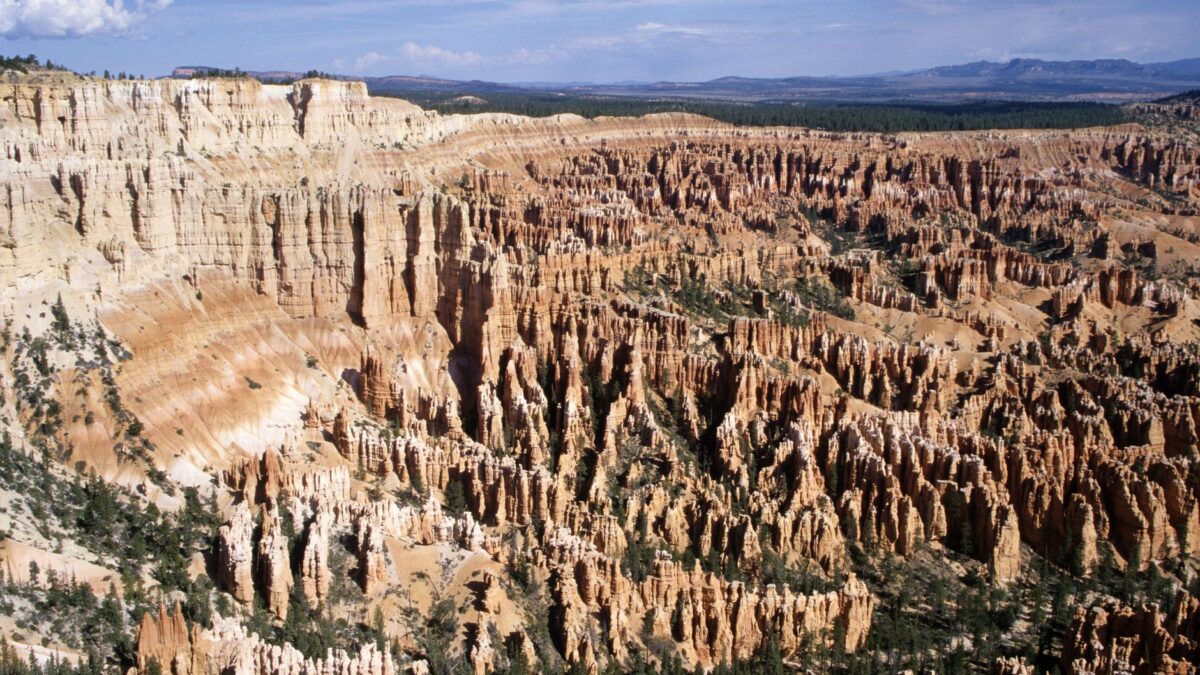
Zion is the better choice for hikers and first-time visitors with 2 to 3 days, while Bryce Canyon is better for a short visit, families who want easy rim walks, and summer travelers, because it sits about 4,000 feet higher and stays roughly 20°F cooler. The two parks are about 85 miles apart, a drive of roughly 1.5 to 2 hours, so most Utah trips include both.
The difference starts with the view. In Zion you stand on a canyon floor and look up at sandstone walls more than 2,000 feet high. In Bryce Canyon you stand on a rim and look down into amphitheaters filled with orange and white rock spires called hoodoos.
How do Zion and Bryce Canyon compare?
The table puts the main differences side by side, with fees and rules as of November 2026 and visitation from National Park Service figures for 2025.
| Factor | Zion | Bryce Canyon |
|---|---|---|
| Main view | Looking up from a deep canyon floor | Looking down into hoodoo amphitheaters |
| Elevation | About 4,000 ft in Zion Canyon | About 8,000 to 9,100 ft along the rim |
| 2025 recreation visits | 4,984,525 | About 2 million |
| Vehicle entry | $35 for 7 days | $35 for 7 days |
| Shuttle | Required in Zion Canyon, March to late November | Optional, April to mid-October |
| July average high | Upper 90s to 100°F or more | 80°F |
| January average high / low | Cool; occasional snow that melts quickly | 37°F / 15°F, frequent snow |
| Signature hikes | Angels Landing (permit), The Narrows | Navajo Loop and Queens Garden, Fairyland Loop |
| Days needed | 2 to 3 | 1 to 2 |
| Nearest towns | Springdale, Hurricane, St. George | Bryce Canyon City, Tropic, Panguitch |
Both parks are among the eleven where, since January 1, 2026, visitors who are not U.S. residents and are 16 or older pay an extra $100 per person unless they hold the $250 nonresident annual pass. The $80 America the Beautiful pass covers both for U.S. residents.
Which park has better hikes?
Zion has more famous and more varied hikes, but Bryce Canyon has the easiest high-reward walks. Zion’s best trails climb canyon walls or follow the river; Bryce’s best trails drop below the rim and loop back up.
- Zion highlights: Angels Landing (5.4 miles round trip, 1,488 feet of gain, permit by lottery), The Narrows (wading upstream in the Virgin River, no permit for the bottom-up day hike), Emerald Pools, Canyon Overlook and the paved Pa’rus Trail.
- Bryce highlights: the Rim Trail between Sunrise and Sunset points (nearly flat), the Navajo Loop and Queens Garden combination (about 3 miles), Peekaboo Loop and the longer Fairyland Loop (about 8 miles).
Bryce trails are shorter, but the climb back to the rim happens at more than 8,000 feet, which tires many visitors faster than they expect. Sections of the Navajo Loop close at times for rockfall or ice, so check trail status at the visitor center. Our Zion National Park guide covers the Angels Landing lottery and Narrows flow rules in detail.
Which park is more crowded?
Zion is far more crowded. It recorded close to 5 million recreation visits in 2025, more than twice the Bryce Canyon total, and most of those visitors funnel into one canyon road served by the shuttle. Expect lines at the Zion Canyon Visitor Center shuttle stop on spring and fall mornings, and a full parking lot by mid-morning.
Bryce Canyon gets busy at Sunset Point, Sunrise Point and Inspiration Point around sunrise and midday, but the crowds spread out along an 18-mile rim road. Its shuttle is voluntary; in 2026 it ran from April 3 to October 18 and stopped about every 15 minutes, according to the park’s Bryce Canyon shuttle page.
How do elevation and weather differ?
Bryce Canyon is cooler in every season because the rim sits about 4,000 to 5,000 feet higher than Zion Canyon. That difference shapes the best time for each park.
| Season | Zion | Bryce Canyon |
|---|---|---|
| Spring (Mar–May) | Warm days; high river may close The Narrows | Cold, snow still possible into April |
| Summer (Jun–Aug) | Hot, often near 100°F; flash flood risk July to September | Highs in the 70s–80s °F; afternoon thunderstorms in July and August |
| Fall (Sept–Nov) | Best hiking weather, fall color in late October | Crisp days, freezing nights, first snow often in October or November |
| Winter (Dec–Feb) | Mild days, quiet canyon, no shuttle in most weeks | Snow on red hoodoos, highs in the 30s °F |
Bryce figures come from the park’s published monthly averages; nights fall below freezing at Bryce nearly every night from October through May. At both parks, the park service’s lightning advice applies on exposed rims: when thunder roars, go indoors.
How many days do you need for each park?
Plan 2 to 3 days for Zion and 1 to 2 days for Bryce Canyon. One full day in Bryce covers sunrise at Sunrise or Bryce Point, a below-the-rim loop and the drive to Rainbow Point. A second day adds Fairyland Loop or a ranger astronomy program, since Bryce’s dark skies are among the best in the Southwest.
Zion needs more time because the canyon trails start from different shuttle stops, Angels Landing alone takes about four hours, and The Narrows can fill a day. Kolob Canyons, in a separate section off Interstate 15, adds a half day.
How do you get between Zion and Bryce Canyon?
The usual route runs east from Springdale on the Zion–Mount Carmel Highway through the park’s 1.1-mile tunnel, then north on US-89 and east on State Route 12 to Bryce Canyon City. The trip is about 85 miles and takes about 1.5 to 2 hours. Large RVs and trailers need a tunnel permit for a fee, and the largest vehicles must use a longer route.
Many travelers combine both parks with the Grand Canyon in one loop from Las Vegas; see our 7-day Grand Canyon, Zion and Bryce itinerary, or the Utah Mighty 5 road trip if you want Capitol Reef, Arches and Canyonlands too.
Which park should you choose?
If you can see only one, match the park to your trip:
- First visit to Utah, 2+ days: Zion, for the variety of trails and canyon scale.
- Only one day: Bryce Canyon, because its main viewpoints line one road.
- Summer trip: Bryce Canyon, which avoids Zion’s 100°F afternoons.
- Young kids or limited mobility: Bryce Canyon’s flat Rim Trail, or Zion’s paved Pa’rus Trail and Riverside Walk.
- Serious hikers: Zion, especially if you win an Angels Landing permit.
- Winter: Zion for mild hiking, Bryce for snow on the hoodoos.
- Smaller crowds: Bryce Canyon.
Bottom line
Choose Zion for hiking, river walks and a longer stay, and Bryce Canyon for a short, cooler visit with big views from the rim. Because the parks are only about two hours apart, the best plan for most travelers is two or three nights near Zion and one night near Bryce.
FAQ
Can you visit Zion and Bryce Canyon in one day?
It is possible but rushed. You would spend about four hours driving round trip and see only viewpoints, so most travelers give each park at least one full day.
Is Bryce Canyon worth it if you have seen Zion?
Yes. The hoodoo landscape looks nothing like Zion’s canyon, and the rim views and easy trails make it a good half day even on a tight schedule.
Which park is better for photography?
Bryce Canyon is strongest at sunrise, when light hits the hoodoos from the east. Zion photographs best in the soft light of early morning or late afternoon, when the canyon floor is not in harsh shadow and glare.
Does the America the Beautiful pass cover both parks?
Yes. The $80 annual pass for U.S. residents covers entry to Zion, Bryce Canyon and all other national parks for one year. Visitors from abroad need the $250 nonresident annual pass, which also covers the $100 surcharge at both parks.