AWD or 4WD for Zion and Bryce in Winter: Roads, Snow and Chains
Most winter visitors reach Zion and Bryce on plowed roads with 2WD and good tires. AWD helps on snow days. See closures, chain rules and storm tips.
You do not need AWD or 4WD to visit Zion, Bryce Canyon or the other Utah national parks in winter, because the main park roads and the highways leading to them are paved and plowed. A front-wheel-drive car with good all-season or winter tires handles most winter days. AWD or 4WD is worth paying for if you plan to drive during or right after a snowstorm, especially around Bryce Canyon, which sits at roughly 8,000 to 9,100 feet (2,400 to 2,800 meters) and gets far more snow than Zion.
How snowy are the roads in Zion in winter?
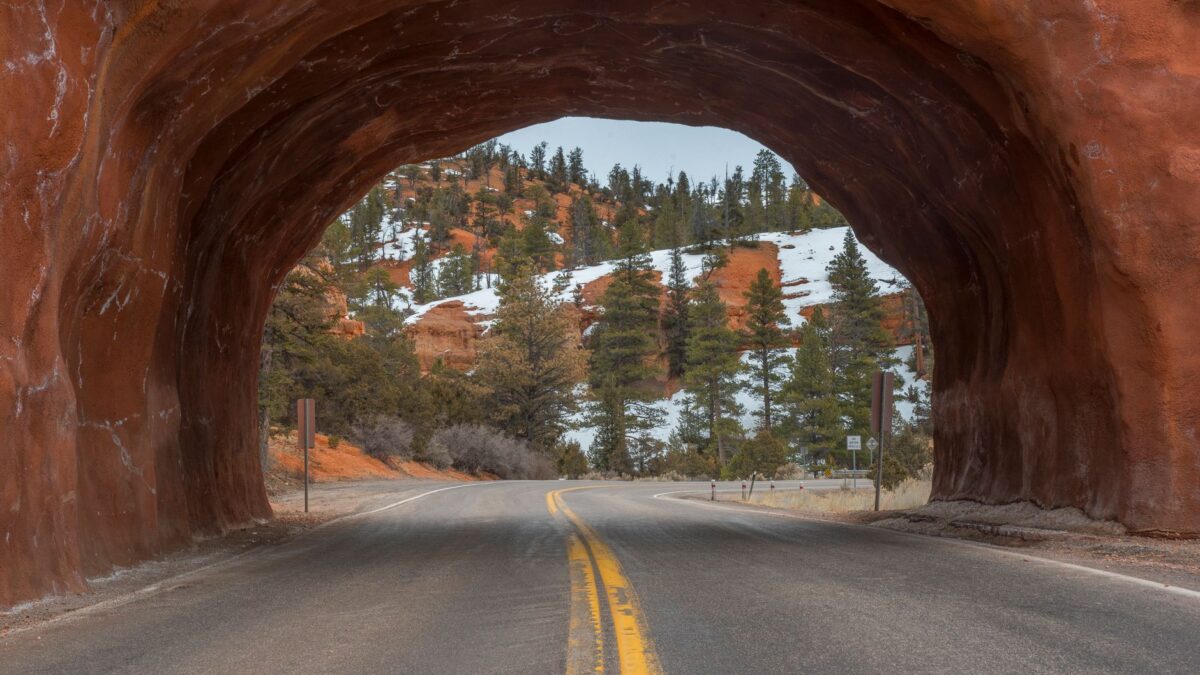
Zion Canyon is low, with the canyon floor near 4,000 feet (1,200 meters), so snow on the valley roads tends to be light and melts fast. The Zion-Mount Carmel Highway (Utah Route 9) stays open all year, including the tunnel, and is plowed after storms. The switchbacks east of the tunnel and the plateau beyond can stay icy in shaded spots well into the day.
Kolob Terrace Road climbs to much higher ground and is usually closed by snow for part of the winter. The Kolob Canyons road off Interstate 15 can close for short periods after storms. For shuttle schedules and the rest of the park’s seasonal details, see the Zion park guide.
Is the road through Bryce Canyon open in winter?
Yes. The main Bryce Canyon road is open in winter, and crews plow it after storms, starting with the section near the visitor center and the main viewpoints. Higher sections toward Rainbow Point can close for a time after heavy snow until plows clear them. Side roads to some viewpoints may also stay closed after a storm.
The approach roads, Utah Route 12 and US Route 89, are plowed state highways. Route 12 east of Bryce, including the narrow ridge stretch between Escalante and Boulder, is exposed to wind and ice and is a road to avoid in an active storm.
When does AWD or 4WD actually help?
All-wheel drive helps you get moving and keep moving on snow, which matters on hills, in fresh snow before plows arrive, and in icy parking lots. It does not help a car stop or steer on ice. Tires do most of that work.
- Driving to Bryce Canyon, Cedar City or over mountain passes on the day of a forecast storm.
- Staying at higher-elevation lodging, where side streets and driveways are plowed last.
- Planning a tight schedule that cannot wait half a day for plows.
If you can stay put during a storm and drive once the roads are cleared, a 2WD car is usually fine. Dirt and gravel roads in and around the parks are a separate matter: many turn to slick mud or close in winter, and AWD does not make them safe.
Do you need snow chains or special tires?
Chains are rarely needed on the main roads to Zion and Bryce, and rental car agreements often forbid putting them on, so read yours before you buy any. Tires make the larger difference. Look for tires marked M+S (mud and snow) at minimum, or the three-peak mountain snowflake symbol for real winter tires, and check that the tread is not worn.
- Ask the rental company for an AWD or 4WD vehicle with M+S tires if you expect snow.
- Check tire tread and pressure before you leave a city; cold air lowers pressure.
- Carry a scraper, a blanket, water, snacks and a phone charger.
- Keep the fuel tank at least half full, since gas stations are far apart on rural highways.
Utah does have chain and traction rules on some mountain canyon roads near Salt Lake City, but those are far from the southern parks.
How do you check road closures before you drive?
Check two sources on the morning you drive: the park and the state transportation department. The National Park Service posts current conditions and closures for Zion National Park and Bryce Canyon National Park, and the Utah Department of Transportation shows live road conditions, closures and highway cameras on UDOT Traffic. A National Weather Service forecast for the right elevation helps too, because Springdale and Bryce Canyon can have completely different weather on the same day.
What about Arches, Canyonlands and Capitol Reef?
The main paved roads in Arches, Canyonlands (Island in the Sky) and Capitol Reef stay open in winter and are plowed after storms, though short closures happen. Utah Route 24 through Capitol Reef is a through highway and is maintained all year. Unpaved routes in these parks, such as backcountry roads, often need high clearance or 4WD in any season and may be impassable when wet or snowy. If you are linking all five parks, the 7-day Mighty 5 road trip lays out the driving order, and the guide to national parks in winter covers which roads stay open across the country.
Common winter driving mistakes in southern Utah
- Trusting a GPS shortcut onto an unpaved or seasonal road.
- Assuming dry roads in Zion mean dry roads at Bryce two hours later.
- Driving after dark on rural highways, where ice and deer are harder to see.
- Using cruise control on roads that may have black ice.
- Stopping on the road shoulder at viewpoints instead of in plowed pullouts.
Quick answers
Can I drive a regular rental car to Bryce Canyon in winter?
Yes, on most days. Choose a car with good M+S tires and wait out active storms; the roads are usually plowed within hours.
Is the Zion tunnel open in winter?
Yes. The Zion-Mount Carmel Tunnel on Route 9 is open year-round, though storms or rockfall can close it briefly.
Should I pay extra for an SUV?
Pay for AWD if your dates are fixed and you must drive Bryce or mountain routes regardless of weather. If your plans can shift by a day, good tires on a standard car are enough.
Can I drive from Zion to Bryce in one winter day?
Yes. The drive is about two hours in normal conditions; allow extra time after snow.