Utah Mighty 5 Road Trip in 7 Days: Zion to Arches Itinerary
Five national parks, one week and about 900 miles of desert driving. This plan puts the parks in the order that saves the most time and explains which permits and passes you actually need.
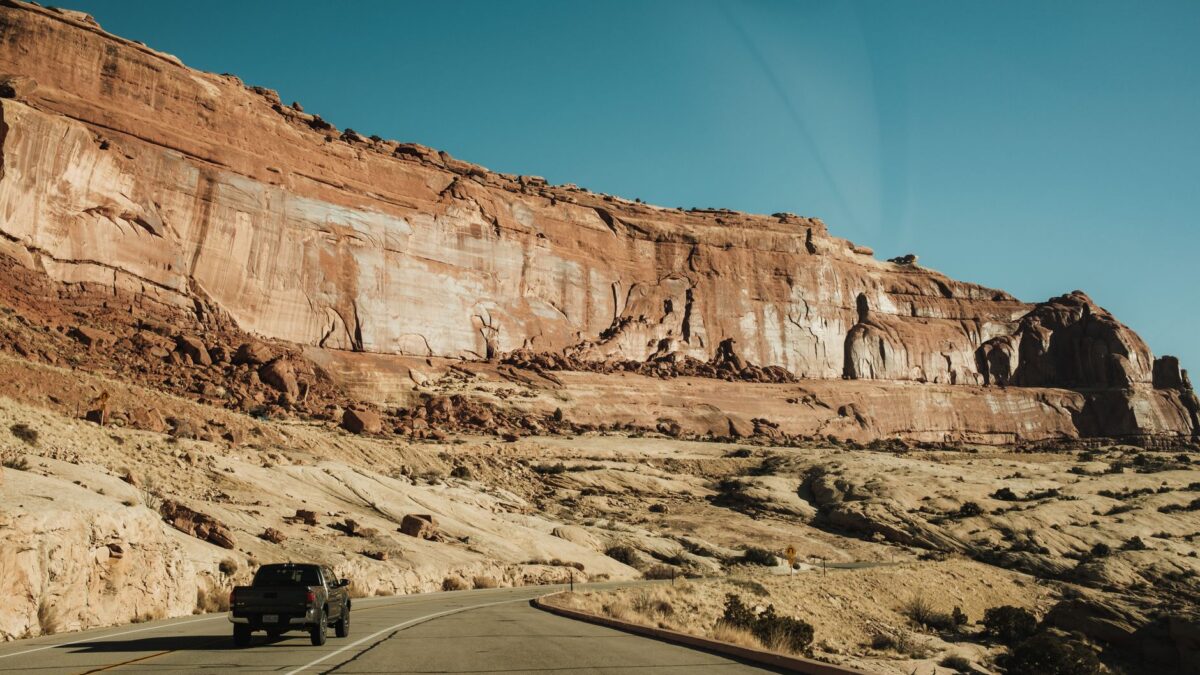
You can see all five of Utah’s national parks in 7 days by driving Zion, Bryce Canyon, Capitol Reef, Arches and Canyonlands in that order from Las Vegas, ending in Salt Lake City. The route is about 900 miles. As of November 2026, Arches has no timed-entry reservation, but Angels Landing in Zion still needs a permit.
The plan gives two nights each to Zion and Moab, one night each near Bryce and Capitol Reef, and a final travel day. It works in reverse from Salt Lake City too.
What order should you visit the Mighty 5?
West to east is the most efficient order: Zion, Bryce Canyon, Capitol Reef, then Arches and Canyonlands from a base in Moab. Fly into Las Vegas and out of Salt Lake City to avoid a seven-hour drive back. If you must return to Las Vegas, split the last drive or drop Capitol Reef to a short stop.
| Leg | Distance | Drive time (no stops) |
|---|---|---|
| Las Vegas to Springdale (Zion) | about 160 miles | 2.5–3 hours |
| Springdale to Bryce Canyon | about 85 miles | 1.75–2 hours |
| Bryce Canyon to Torrey (Capitol Reef) on Scenic Byway 12 | about 120 miles | 2.5–3 hours |
| Torrey to Moab | about 145 miles | 2.5 hours |
| Moab to Island in the Sky (Canyonlands) | about 32 miles | 40–45 minutes |
| Moab to Salt Lake City | about 235 miles | 4 hours |
| Moab to Las Vegas (if looping back) | about 460 miles | 7 hours |
Utah is on Mountain Time, one hour ahead of Nevada, so you lose an hour on Day 1.
What should you do each day?
Day 1: Las Vegas to Zion
Drive to Springdale, the town at Zion’s south entrance. In the afternoon, walk the paved Pa’rus Trail along the Virgin River and watch sunset light on the Watchman. Base: Springdale.
Day 2: Zion Canyon
Ride the shuttle up Zion Canyon early. Choose Angels Landing if you won a permit, Scout Lookout if you did not, or the Riverside Walk into the lower Narrows if that area is open. Emerald Pools is a good shorter hike. Base: Springdale.
Day 3: Zion to Bryce Canyon
Leave Zion on the Zion–Mount Carmel Highway, stopping for the short Canyon Overlook Trail near the tunnel. At Bryce, hike the Queen’s Garden Trail, combined with the Navajo Loop when it is open, for a walk of about 3 miles down among the hoodoos and back up. In early November 2026, the park closed the Wall Street and Two Bridges side of the Navajo Loop after freezing weather raised the rockfall risk, so check trail status at the visitor center. Base: Bryce Canyon City or Tropic.
Day 4: Scenic Byway 12 to Capitol Reef
Watch sunrise at Sunrise or Sunset Point, then drive Scenic Byway 12 through Escalante and Boulder, including the narrow ridge section called the Hogback. At Capitol Reef, see the Fruita orchards and petroglyph panel, drive the Scenic Drive and hike to Hickman Bridge. Base: Torrey.
Day 5: Capitol Reef to Moab and Delicate Arch
Drive to Moab, with an optional stop at Goblin Valley State Park. In late afternoon, hike to Delicate Arch for sunset: about 3 miles round trip on open slickrock with no shade, so carry water and a headlamp. Base: Moab.
Day 6: Arches and Canyonlands
Catch sunrise at Mesa Arch in Canyonlands’ Island in the Sky district, then walk to Grand View Point. In the afternoon, see the Windows, Double Arch and Landscape Arch in Arches. Dead Horse Point State Park, near Island in the Sky, charges its own state park fee. Base: Moab.
Day 7: Moab to Salt Lake City
Drive about four hours to Salt Lake City for your flight, or take one more morning hike in Arches first.
Do you need reservations or permits in 2026?
Arches: no timed entry in 2026
Arches National Park announced in February 2026 that it would not use its timed-entry reservation system in 2026, after four seasons of a pilot program. The park is generally open 24 hours, but from March to October entrance waits can exceed 60 minutes, and rangers may temporarily stop entries when lines reach the highway or parking lots fill. Fiery Furnace hikes still need a permit. Check the Arches alerts and conditions page before you drive in.
Zion shuttle season
The Zion Canyon shuttle is free and needs no ticket. It generally runs from March through November; during shuttle season, private cars are not allowed on Zion Canyon Scenic Drive. The posted fall schedule has the first bus at 7 a.m. and no service from November 29 to December 25.
Angels Landing permit
A permit is required for the chains section from Scout Lookout to the summit. You can enter a seasonal lottery months ahead or a day-before lottery that runs from 12:01 a.m. to 3 p.m. Mountain Time, with results at 4 p.m. As of November 2026, each application costs $6 for up to six people, plus $3 per person if you win. Details are on Zion’s Angels Landing permit page.
The Narrows
The Narrows closes when the Virgin River flows above 150 cubic feet per second or when the National Weather Service issues a flash flood warning, and the park closes all slot canyons ahead of forecast storms. Spring snowmelt often keeps it closed into early summer. In August 2026, a rockfall also closed access to the Temple of Sinawava, the shuttle stop for the Riverside Walk and the Narrows, so check Zion’s current alerts before you plan a Narrows day.
Should you buy a pass or pay at each park?
Buy the America the Beautiful pass. Paying at each park costs $150 per vehicle as of November 2026, while the annual pass is $80 for US residents and $250 for non-US residents.
| Park | Vehicle fee (7 days) | Extra $100 per nonresident age 16+? |
|---|---|---|
| Zion | $35 | Yes |
| Bryce Canyon | $35 | Yes |
| Capitol Reef (Scenic Drive) | $20 | No |
| Arches | $30 | No |
| Canyonlands | $30 | No |
| Total | $150 | $200 per nonresident adult |
For two non-US adults paying park by park, the total would be $550, so the $250 nonresident pass, which covers the holder and passengers in one vehicle including the nonresident fee, saves $300. See our guide to national park fees for international visitors for proof-of-residency rules, and to the America the Beautiful pass for discounted versions.
When is the best time to visit Utah’s national parks?
Late March to May and mid-September to October are the best times: daytime highs are mild in Zion and Moab, and Bryce is mostly free of snow.
| Months | Conditions |
|---|---|
| March–May | Mild at low elevations; snow possible at Bryce; the Narrows often closed by snowmelt |
| June–August | Over 100°F in Zion and Moab; afternoon storms and flash floods from mid-summer |
| September–October | Best overall weather; busy weekends; fall color in Zion in late October |
| November–February | Quiet; snow at Bryce and on Scenic Byway 12; Zion Scenic Drive open to cars outside shuttle season |
Heat and flash floods are the main dangers. Start hikes at dawn in summer, carry at least a gallon of water per person for a full day, and stay out of slot canyons and narrow washes when storms are forecast anywhere upstream. Zion’s safety page covers heat, cliffs and flash floods.
How much does a Mighty 5 road trip cost?
For two people sharing a room and a car, plan on roughly $2,000–$2,700 on a budget, $3,300–$4,300 mid-range and $5,800 or more for comfort, excluding flights. These are planning estimates as of November 2026; add $170 for two non-US residents buying the $250 pass instead of the $80 one.
| Item | Budget | Mid-range | Comfort |
|---|---|---|---|
| Lodging per night | $110–$170 (motels, Tropic, Torrey) | $180–$300 (Springdale and Moab hotels) | $320–$550 (resorts, upscale lodges) |
| Car per day | $45–$75 | $65–$100 | $90–$140 (SUV) |
| Fuel for about 900 miles | $130–$200 | $130–$200 | $150–$220 |
| Food per person per day | $40–$60 | $70–$100 | $130 or more |
| Park pass, permits, tours | $80–$100 | $150–$250 | $400 or more (guided canyoneering, jeep tours) |
| Rough total for two | $2,000–$2,700 | $3,300–$4,300 | $5,800 or more |
One-way rentals between Las Vegas and Salt Lake City may carry a drop fee, so compare it with the cost of driving back.
What if you have less or more time?
- 5 days: drop Capitol Reef to a drive-through and skip Canyonlands, or focus on Zion and Bryce only. Our Zion vs Bryce Canyon comparison helps you choose.
- 9–10 days: add a third night in Moab for Canyonlands’ Needles district, a night in Escalante for slot canyons with a guide, or Monument Valley on the way south.
Bottom line
Seven days is enough for all five parks if you drive west to east and fly home from Salt Lake City. Buy the America the Beautiful pass, apply for the Angels Landing lottery early, start every hike at dawn from June to September, and book Springdale and Moab rooms before anything else.
FAQ
Do you need a reservation for Arches National Park in 2026?
No. Arches did not use timed entry in 2026, though Fiery Furnace and the campground still need bookings. Check the park website for 2027 rules.
Is 7 days enough for all five Utah parks?
Yes, at a steady pace with one or two main hikes per park. Ten days lets you add the Needles district, slot canyons and rest days.
Can you drive your own car through Zion Canyon?
Only outside shuttle season, which usually means December to February. The Zion–Mount Carmel Highway is open to cars all year, with size limits in the tunnel for large vehicles.
Which Mighty 5 park can you skip if short on time?
Capitol Reef or Canyonlands, depending on your interests. Capitol Reef is quieter and has history, while Canyonlands’ Island in the Sky has the biggest overlooks.