West Coast Road Trip in 14 Days: Seattle to San Diego Day by Day
About 1,800 miles of coast, rain forest and redwoods in two weeks. Here is where to sleep each night, how long each drive takes and why the one-way car rental fee belongs in your budget from day one.
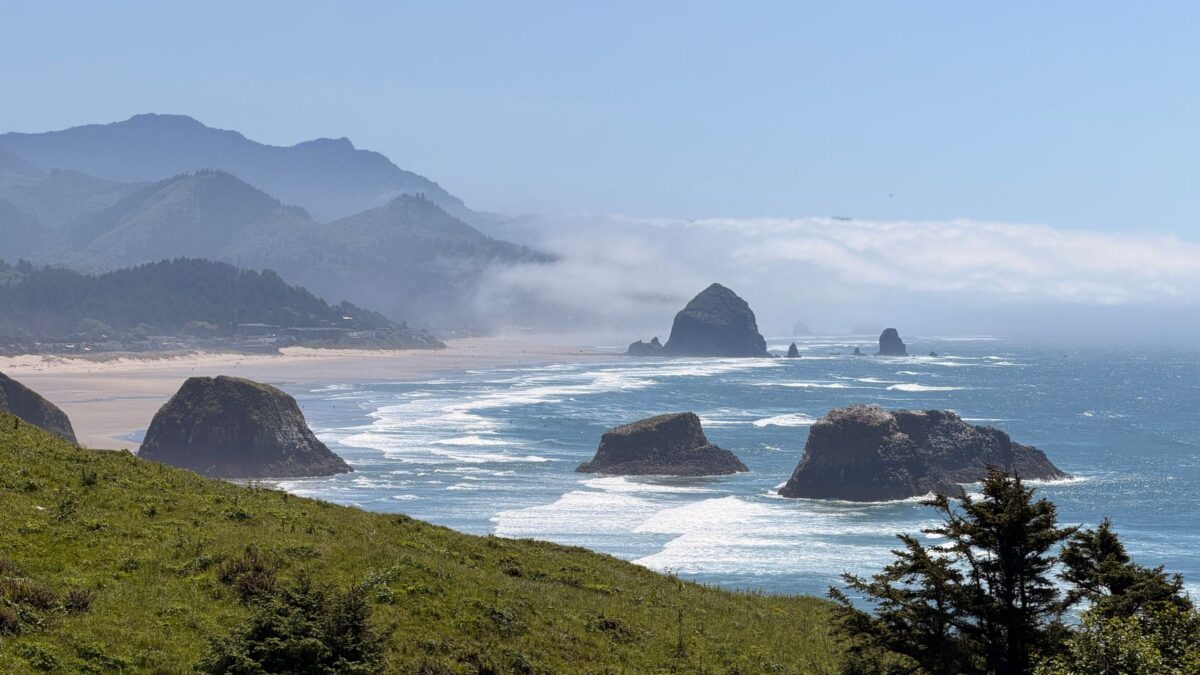
A 14-day West Coast road trip from Seattle to San Diego covers about 1,800 miles: Olympic National Park, Portland, the Oregon Coast, the redwoods, San Francisco, Big Sur and Los Angeles. Plan 13 nights in 11 places, drive 2 to 5 hours on most days, and budget for a one-way rental drop fee, which can add several hundred dollars.
The best months are July through September, when the Pacific Northwest is driest and every road on the route is normally open.
How many nights should you spend at each stop?
Two nights in San Francisco and one night everywhere else keeps the pace steady. Most days have one main drive plus short stops.
| Night | Base | Drive to get there | Approx. time |
|---|---|---|---|
| 1 | Seattle | Arrival | – |
| 2 | Port Angeles | About 80 miles with a ferry | 2.5–3 hours |
| 3 | Lake Quinault or Forks | About 190 miles of park stops | 4–5 hours total |
| 4 | Portland | About 165 miles | 3–3.5 hours |
| 5 | Cannon Beach | About 80 miles | 1.5 hours |
| 6 | Newport | About 115 miles | 2.5–3 hours |
| 7 | Brookings | About 205 miles | 4–4.5 hours |
| 8 | Trinidad or Arcata | About 85 miles | 1.75–2 hours |
| 9–10 | San Francisco | About 300 miles | 5.5–6 hours |
| 11 | Monterey or Carmel | About 120 miles | 2–2.5 hours |
| 12 | Cambria | About 110 miles via Big Sur | 3 hours |
| 13 | Los Angeles | About 215 miles | 4–4.5 hours |
| Day 14 | San Diego (fly home) | About 120 miles | 2–3 hours with traffic |
What should you do each day?
Day 1: Seattle
Walk Pike Place Market and the waterfront, then visit Seattle Center. Pick up the car on the morning of Day 2.
Day 2: Ferry to the Olympic Peninsula
Take a Washington State Ferry from Seattle to Bainbridge Island or from Edmonds to Kingston, then drive to Port Angeles. In the afternoon, drive up to Hurricane Ridge if the road is open for mountain views.
Day 3: Lake Crescent, Hoh Rain Forest and the coast
Walk to Marymere Falls at Lake Crescent, spend two hours in the Hoh Rain Forest on the Hall of Mosses and Spruce Nature trails, then stop at Ruby Beach on the way south. Check a tide table before beach walks. Base: Lake Quinault or Forks.
Day 4: Lake Quinault to Portland
Do a short rain forest loop at Lake Quinault in the morning, then drive to Portland for food carts, bookstores and gardens.
Day 5: Cannon Beach
Drive to the coast at Cannon Beach. See Haystack Rock at low tide and the headland views at Ecola State Park.
Day 6: Three Capes area to Newport
Follow US-101 south through Tillamook to Cape Kiwanda at Pacific City, Depoe Bay and Yaquina Head Outstanding Natural Area near Newport, where a lighthouse overlooks tide pools.
Day 7: Central and southern Oregon Coast
This is the longest coast day: Cape Perpetua, Heceta Head, the Oregon Dunes near Florence, Bandon’s sea stacks and the Samuel H. Boardman State Scenic Corridor. Start early.
Day 8: The redwoods
Cross into California and walk Stout Grove in Jedediah Smith Redwoods State Park, then the Lady Bird Johnson Grove and Prairie Creek area. Fern Canyon is reached by an unpaved road with stream crossings; the park recommends high-clearance vehicles.
Day 9: Avenue of the Giants to San Francisco
Drive the Avenue of the Giants through Humboldt Redwoods State Park, then continue south on US-101 to San Francisco. This is the longest drive of the trip.
Day 10: San Francisco
Take a day off from driving: Golden Gate Bridge, the waterfront, Chinatown and a cable car ride.
Day 11: Santa Cruz to Monterey
Drive Highway 1 to Santa Cruz and Monterey, and finish in Carmel or at Point Lobos.
Day 12: Big Sur
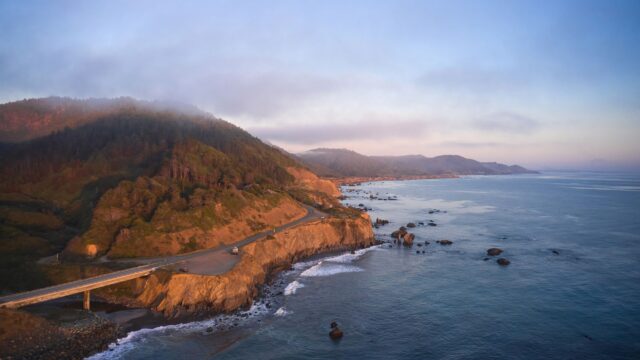
Drive the Big Sur coast with stops at Bixby Creek Bridge, Pfeiffer Big Sur and McWay Falls, then the elephant seal viewing area near San Simeon. Fill up on gas before you leave Carmel.
Day 13: Santa Barbara to Los Angeles
Stop in Santa Barbara for lunch, then follow the coast through Malibu to Santa Monica.
Day 14: San Diego
Drive south to San Diego. With a late flight, you have time for La Jolla Cove or Balboa Park.
What park rules and road conditions should you check?
Olympic National Park
Olympic charges $30 per private vehicle for 7 days as of November 2026, and it is not on the list of parks with the $100 nonresident fee. The Hurricane Ridge Day Lodge burned in May 2023 and has not been rebuilt; a utilities project has left no drinking water on the ridge, so bring your own. Hurricane Ridge Road can close for ice outside summer. Mora and Kalaloch campgrounds required reservations from May 15 to September 20 in 2026. Check Olympic’s alerts and conditions page the day before you go.
Redwood National and State Parks
Redwood National Park has no entrance fee, but some state park day-use areas inside the parks charge parking. In recent summers, Gold Bluffs Beach and Fern Canyon have needed a day-use permit. See the Redwood conditions page for road status.
Highway 1 and the coast
Highway 1 through Big Sur reopened fully in January 2026 after the Regent’s Slide repair, but storms can still close it for short periods. Check Caltrans QuickMap before Day 12. On Oregon and Washington beaches, watch for sneaker waves and rolling logs, and never turn your back on the ocean.
How much is the one-way rental, and what should you book ahead?
One-way rentals between Washington and California often carry a drop fee that can run to several hundred dollars, and some companies price the whole rental higher instead. Compare the total price, not the daily rate. One way to cut it: return the car in Los Angeles and take the Amtrak Pacific Surfliner to San Diego. Our guide to renting a car for a road trip explains drop fees, mileage and insurance.
- Car: as soon as dates are set, since one-way availability is limited in summer.
- Coast lodging: two to four months ahead for Cannon Beach, Big Sur and Carmel in summer.
- Olympic and Redwood campgrounds: when reservations open on Recreation.gov or ReserveCalifornia.
- Ferry: the Bainbridge and Kingston routes do not take vehicle reservations, so allow extra time on summer weekends.
When is the best time for a West Coast road trip?
July through September is the best window. September is often the best single month, with dry weather in the north and less fog in California.
| Months | Washington and Oregon | California coast |
|---|---|---|
| April–June | Green but showery; some high roads still snowy | Wildflowers; frequent morning fog from May |
| July–August | Driest, warmest, busiest | Fog common in San Francisco and Monterey; peak prices |
| September–October | Mostly dry into early October | Clearest and warmest coastal weather |
| November–March | Heavy rain and storms; mountain roads close | Mild, but storms can close Highway 1 |
How much does a 14-day West Coast road trip cost?
For two people sharing a room and a car, expect roughly $4,800–$6,000 on a budget, $7,800–$9,500 mid-range and $13,000 or more for comfort, excluding flights. These are planning estimates as of November 2026.
| Item | Budget | Mid-range | Comfort |
|---|---|---|---|
| Lodging per night | $120–$180 | $200–$320 | $350–$600 |
| Car per day | $50–$80 | $70–$110 | $100–$150 |
| One-way drop fee | Varies widely by company, often several hundred dollars | ||
| Fuel for about 1,800 miles | $300–$400 | $300–$400 | $350–$450 |
| Food per person per day | $45–$65 | $80–$120 | $150 or more |
| Park fees, ferries, attractions | $100–$200 | $250–$400 | $500 or more |
| Rough total for two | $4,800–$6,000 | $7,800–$9,500 | $13,000 or more |
The America the Beautiful pass ($80 for US residents as of 2026) only pays off on this route if you add more fee parks.
What if you have less or more time?
- 10 days: start in Portland instead of Seattle and skip Olympic, or end in San Francisco and skip Southern California.
- 17–21 days: add Mount Rainier and the Columbia River Gorge, a second night on the Olympic coast, Crater Lake from the southern Oregon Coast, or Yosemite from San Francisco.
For more ideas on the Oregon section, see our list of Oregon natural wonders, and for the California half on its own, our Pacific Coast Highway itinerary.
Bottom line
Two weeks is the right length for Seattle to San Diego if you accept one night in most places. Book the one-way car first and price the drop fee, give San Francisco two nights to break up the driving, and travel between July and September for the best chance of dry roads in the north.
FAQ
How many miles is Seattle to San Diego along the coast?
The coastal route in this plan is about 1,800 miles, including Olympic National Park. The fastest inland route on Interstate 5 is roughly 1,250 miles.
Is it better to drive north to south?
Southbound puts the ocean on your side of the road, which makes pulling into viewpoints easier. Prices and rental availability can differ by direction, so check both.
Do you need a reservation for Olympic or Redwood?
Neither park needs an entry reservation as of November 2026. Popular campgrounds need reservations in summer, and Fern Canyon has required a day-use permit in recent summers.