Florida Road Trip in 10 Days: Miami, the Keys, Gulf Coast and Orlando
Ten days is enough to see the Everglades, drive the whole Overseas Highway, catch a Gulf Coast sunset and end at the theme parks or a rocket launch site, if you plan the long drives and the bookings well.
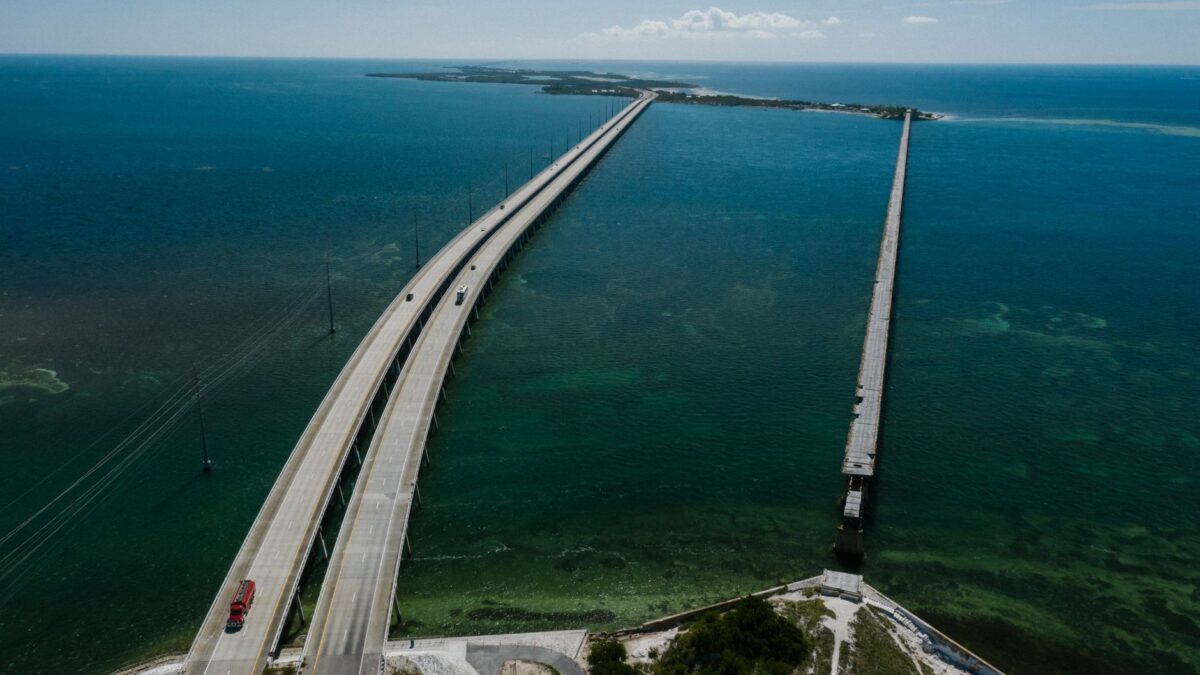
A 10-day Florida road trip can loop roughly 1,000 miles from Miami through Everglades National Park, down the Overseas Highway to Key West, across the Tamiami Trail to Naples, up the Gulf Coast to St. Petersburg and Tampa, and finish in Orlando or on the Space Coast. The best months are December through April, the dry season, when heat, afternoon storms and mosquitoes ease. Most Florida toll roads are cashless, so sort out tolls before you pick up the car, and book Keys lodging and the Dry Tortugas ferry early.
This plan suits first-time visitors who want a mix of wildlife, beaches and one big-ticket attraction. It assumes you fly into Miami and out of Orlando; if you need to return the car where you rented it, add about 230 miles (3.5 to 4 hours) on the last day.
What does the 10-day Florida route look like?
The route runs south first, because the Keys are a dead end: you drive down and come back up the same road. After that it turns west across the Everglades and north along the Gulf before cutting inland. Times below are typical driving times without stops; traffic around Miami, Tampa and Orlando can add an hour at rush hour.
| Leg | Approx. miles | Drive time |
|---|---|---|
| Miami to Homestead (Everglades main entrance) | 40 | 1 hr |
| Homestead to Islamorada / Marathon | 45–90 | 1–2 hr |
| Marathon to Key West | 50 | 1–1.25 hr |
| Key West to Naples via Tamiami Trail (US-41) | 250 | 5–6 hr |
| Naples to St. Petersburg | 160 | 2.5–3 hr |
| St. Petersburg to Orlando | 105 | 1.75–2 hr |
| Orlando to Kennedy Space Center / Cocoa Beach | 50–60 | 1 hr |
How should you spend 10 days in Florida? Day by day
Day 1: Miami
Spend the first day close to where you land. Walk the Art Deco Historic District along Ocean Drive and Collins Avenue in Miami Beach, then cross to Little Havana for Calle Ocho and Cuban coffee, or to Wynwood for its outdoor murals. Base: Miami Beach or Brickell/downtown.
Day 2: Everglades National Park
Drive about an hour to the Homestead entrance. Stop at the Ernest F. Coe Visitor Center, then walk the short, boardwalked Anhinga Trail at Royal Palm, where alligators and wading birds are common in the dry season. The main park road continues 38 miles to Flamingo on Florida Bay, with short trails such as Pa-hay-okee Overlook on the way. Most airboat tours operate outside the national park, along the Tamiami Trail and in the wider Everglades. Our Everglades National Park guide covers Shark Valley, Flamingo and the wet season in more detail. Base: Homestead or Florida City.
Day 3: Key Largo and Islamorada
Head south on US-1. In Key Largo, John Pennekamp Coral Reef State Park runs snorkel and glass-bottom boat trips to the reef; book a morning trip when water is usually calmer. Continue to Islamorada for lunch and the Florida Keys History of Diving Museum or simply a beach stop. Base: Islamorada or Marathon.
Day 4: Seven Mile Bridge to Key West
Cross the Seven Mile Bridge from Marathon, then stop at Bahia Honda State Park for one of the few natural sand beaches in the Keys. Arrive in Key West by mid-afternoon, walk Duval Street and the old town, and join the sunset crowd at Mallory Square. Base: Key West.
Day 5: Dry Tortugas or a slow Key West day
Dry Tortugas National Park sits about 70 miles west of Key West and is reached only by boat or seaplane. The official ferry is a full-day trip with roughly two hours each way, time to tour Fort Jefferson and snorkel off the beach. If you skip it, visit the Ernest Hemingway Home, the Southernmost Point marker and Fort Zachary Taylor Historic State Park. Base: Key West. See our Florida Keys guide for snorkeling spots and how far ahead the ferry sells out.
Day 6: Back up the Keys and across the Tamiami Trail
This is the longest day. Drive back to Florida City, then west on US-41, the Tamiami Trail. Stop at Shark Valley, where a 15-mile paved loop can be done by tram tour or bicycle, and at the Big Cypress Oasis Visitor Center, where alligators often rest in the canal. Arrive in Naples for sunset at the pier. Base: Naples.
Day 7: Naples to St. Petersburg
Take a slow morning on a Naples beach, then drive north on I-75. In St. Petersburg, visit the downtown waterfront and museums, or go straight to Fort De Soto Park at the mouth of Tampa Bay for beaches and a historic fort. Base: St. Petersburg or St. Pete Beach.
Day 8: Tampa Bay beaches and Tampa
Choose a beach day at Clearwater Beach or Pass-a-Grille, or cross the bay to Tampa for the Riverwalk and the historic cigar district of Ybor City. In winter, consider a morning detour north to Crystal River or Homosassa Springs, where manatees gather in warm spring water. Base: St. Petersburg or Tampa.
Day 9: Orlando
Drive about two hours east on I-4. Spend the day at one theme park, or use it as a quieter day at a natural spring such as Wekiwa Springs State Park. Base: Orlando, near your park or near the airport.
Day 10: Kennedy Space Center and the Space Coast
Kennedy Space Center Visitor Complex is about an hour east of Orlando. Pair it with a drive through Merritt Island National Wildlife Refuge or Canaveral National Seashore, and check the launch schedule: a launch from Cape Canaveral can be seen from public beaches and parks along the Space Coast. Our Florida Space Coast guide explains where to watch. Return to Orlando to fly out.
Where should you stay each night?
| Nights | Base | Why |
|---|---|---|
| 1 | Miami Beach or Brickell | Short ride from MIA airport, walkable |
| 1 | Homestead / Florida City | Closest towns to the main Everglades entrance |
| 1 | Islamorada or Marathon | Splits the Keys drive in half |
| 2 | Key West | Sunset, old town, Dry Tortugas ferry departs here |
| 1 | Naples | End of the Tamiami Trail, Gulf sunset |
| 2 | St. Petersburg or St. Pete Beach | Beaches, museums, day trips around Tampa Bay |
| 1 | Orlando | Theme parks, airport, Space Coast day trip |
What should you book ahead, and how far?
- Keys lodging: book 3 to 6 months ahead for December to April, when Key West rooms are the most expensive on this route.
- Dry Tortugas ferry or seaplane: book as soon as your dates are firm; day trips often sell out weeks ahead in winter and spring. The $15 per-person park entrance fee is included in the ferry ticket.
- Snorkel trips in Key Largo: a few days to two weeks ahead in high season.
- Theme park tickets and Kennedy Space Center: buy dated tickets online in advance, especially for weekends and school holidays.
- Rental car: book early and compare one-way drop fees between Miami and Orlando.
When is the best time for a Florida road trip?
December through April is the best window for this route. It is the dry season in the Everglades, wildlife concentrates around water, and humidity is lower. The trade-off is price: winter and spring break are high season in the Keys and on the Gulf beaches.
The Atlantic hurricane season runs June 1 to November 30, according to NOAA, with the most activity usually from mid-August to late October. If you travel then, buy refundable lodging where you can, watch the National Hurricane Center forecasts, and follow local orders. In the Keys, officials typically order visitors to leave first when a storm threatens, because US-1 is the only road out.
| Season | Weather | Crowds and prices | Verdict |
|---|---|---|---|
| Dec–Feb | Mild, dry, cool nights | High in Keys and Naples | Best for Everglades and wildlife |
| Mar–Apr | Warm, mostly dry | Spring break peaks | Great weather, book early |
| May–Jun | Hot, storms start | Moderate | Fine for beaches, more mosquitoes |
| Jul–Oct | Hot, humid, daily storms, hurricane peak | Lower outside theme parks | Cheapest, highest weather risk |
| Nov | Drying out, warm | Moderate until Thanksgiving | Good shoulder month |
How do Florida toll roads work in a rental car?
Most toll roads on this route are cashless: Florida’s Turnpike and many Miami-area expressways bill by transponder or by photographing your license plate. You have three main options:
- Rental company toll program: easiest, but companies usually add a daily or per-use service fee on top of the tolls.
- Your own transponder: SunPass works everywhere in Florida, and some out-of-state transponders are accepted on many Florida roads; check the list first.
- Avoid tolls: US-1, US-41 and I-75 cover most of this route without tolls, though the Miami and Orlando areas are hard to avoid entirely.
The state’s SunPass page for rental vehicles explains the current rules. Ask the rental desk how its program bills before you drive away.
How much does a 10-day Florida road trip cost?
The table shows rough planning ranges for two travelers sharing a room, excluding flights, as of November 2026. Fuel assumes about 1,000 miles in a midsize car. Keys and winter rates push totals toward the top of each range.
| Item | Budget | Mid-range | Comfort |
|---|---|---|---|
| Lodging (9 nights) | $1,100–1,600 (motels, chain hotels) | $1,900–3,000 (3-star hotels, Keys inns) | $3,500–6,000+ (resorts, waterfront) |
| Rental car (10 days) | $450–700 | $600–900 | $900–1,400 (SUV or convertible) |
| Fuel and tolls | $150–250 | $150–250 | $200–300 |
| Food for two | $600–900 | $1,000–1,500 | $1,800–2,800 |
| Parks and activities | $100–250 (Everglades, state parks, beaches) | $500–900 (plus snorkel trip, Kennedy Space Center) | $1,200–2,500 (Dry Tortugas, theme park, tours) |
| Total for two | $2,400–3,700 | $4,150–6,550 | $7,600–13,000+ |
Everglades National Park charges $35 per private vehicle for a 7-day pass as of November 2026, and an America the Beautiful pass covers it. Since January 1, 2026, visitors who are not US residents, age 16 and older, also pay a $100 per-person nonresident fee at Everglades unless they hold the $250 nonresident annual pass. Dry Tortugas is not on that list.
What if you have less or more time?
With 7 days: drop Orlando and the Space Coast, and fly home from Tampa after Day 8. Or skip the Gulf Coast and drive from the Keys straight up to Orlando on Florida’s Turnpike.
With 14 days: add a night in Sanibel or Fort Myers Beach between Naples and St. Pete, a second Space Coast day timed to a launch, and two nights in St. Augustine, the oldest continuously inhabited European-founded city in the continental US, before flying out of Jacksonville.
Bottom line
A 10-day Florida road trip works best as a south-first loop: Miami and the Everglades, two or three nights in the Keys, the Tamiami Trail to Naples, Tampa Bay, then Orlando or the Space Coast. Go between December and April for dry weather and wildlife, book Key West and the Dry Tortugas ferry early, and decide how you will pay cashless tolls before your first highway.
FAQ
Is 10 days enough for a Florida road trip?
Ten days covers the classic loop of Miami, the Everglades, the Keys, the Gulf Coast and Orlando at a steady pace. You will spend one long day of 5 to 6 hours driving between Key West and Naples. Anything more, such as the Panhandle or St. Augustine, needs extra days.
Can you drive to Key West in one day from Miami?
Yes. Miami to Key West is about 160 miles and takes 3.5 to 4 hours without stops on US-1. Most travelers break it up with a night in Islamorada or Marathon so they can stop at beaches and snorkel sites.
Do I need SunPass for a Florida road trip?
You do not need your own SunPass, but you need some way to pay cashless tolls. Rental companies bill tolls through their own programs, usually with an added fee. Bringing a compatible transponder or avoiding toll roads keeps costs lower.
Is it safe to do a Florida road trip in hurricane season?
Many people travel from June to November without problems, but storms can force evacuations and cancellations. Watch National Hurricane Center forecasts in the days before and during your trip, book refundable lodging, and leave the Keys early if officials order visitors out.