USA Itinerary for 2 Weeks: A First Trip to New York and the West
The classic first-timer combination of one great city in the East and the big landscapes of the West, with realistic distances, time zones and a three-level budget.

A 2-week USA itinerary for first-time visitors works best as New York City for 4 nights, then a flight west for Las Vegas, the Grand Canyon, San Francisco, the California coast and Los Angeles. New York and California are about 2,500 miles apart, so fly between the coasts and use a rental car only in the West. Plan on 2 internal flights, about 1,000 miles of driving and three time-zone changes.
This route suits travelers who want famous cities and one world-class national park without spending whole days in the car. Spring (April to June) and fall (September to October) bring the best weather across all stops.
How big is the USA, and how far apart are these stops?
Distances surprise many first-time visitors. Driving from New York to Los Angeles takes about 40 hours at the wheel, while a nonstop flight takes 5.5 to 6.5 hours. The table shows the legs on this route.
| Leg | Approx. distance | By air | By car |
|---|---|---|---|
| New York to Las Vegas | 2,500 miles | About 5–5.5 hr nonstop | About 38 hr (not practical) |
| Las Vegas to Grand Canyon South Rim | 280 miles | No scheduled airline service | 4.5–5 hr |
| Las Vegas to San Francisco | 570 miles by road | About 1.5 hr | 9 hr |
| San Francisco to Los Angeles via Highway 1 | About 450 miles | About 1.5 hr | 9–10 hr of driving, best over 2–3 days |
| Las Vegas to Los Angeles | 270 miles | About 1 hr | 4–5 hr, heavy traffic on weekends |
What is the best 2-week USA itinerary for a first visit?
Days 1–4: New York City
Use four days for the essentials: Lower Manhattan, the 9/11 Memorial and a walk across the Brooklyn Bridge on Day 1; the Statue of Liberty and Ellis Island on Day 2, booked through the official ferry operator, Statue City Cruises; Central Park and a major museum such as the Metropolitan Museum of Art on Day 3; and Midtown, Times Square, a Broadway show and an observation deck on Day 4. The subway reaches almost everything, so you do not need a car. If you have extra days on the East Coast, our New York and Washington, DC itinerary adds the capital by train. Base: Midtown or Lower Manhattan.
Day 5: Fly to Las Vegas
Morning flights from New York arrive in Las Vegas around midday because of the 3-hour time difference. Pick up a rental car at the airport, rest, and see the Strip’s lights in the evening. Base: Las Vegas.
Days 6–7: Grand Canyon South Rim
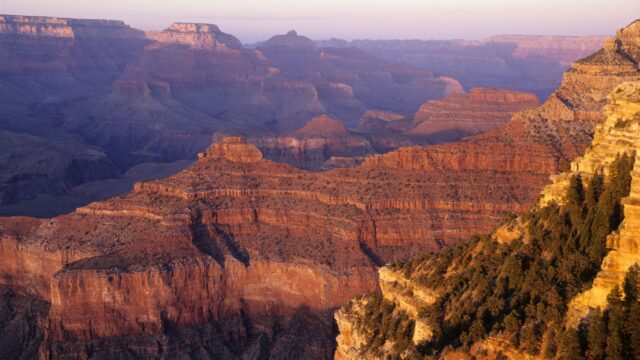
Drive southeast past Hoover Dam and through Kingman, with a stop on a preserved section of historic Route 66 at Seligman or Williams. Arrive at the South Rim for sunset at Mather Point or Hopi Point. On Day 7, walk the Rim Trail, ride the free shuttles and, if you are fit and it is not hot, hike a short way below the rim on the South Kaibab or Bright Angel Trail. Base: Grand Canyon Village or Tusayan. For a longer canyon-country loop, see our Grand Canyon, Zion and Bryce itinerary.
Day 8: Back to Las Vegas, fly to San Francisco
Leave the canyon early, return the car at Las Vegas airport in the early afternoon and take an evening flight of about 1.5 hours to San Francisco. Base: San Francisco.
Days 9–10: San Francisco
Walk across or along the Golden Gate Bridge, ride a cable car, explore Chinatown, North Beach and Fisherman’s Wharf, and take a bay cruise for views of the city and the bridge. On Day 10, cross to Sausalito or visit Muir Woods, which has required a parking or shuttle reservation in recent years. Base: San Francisco.
Days 11–12: The California coast
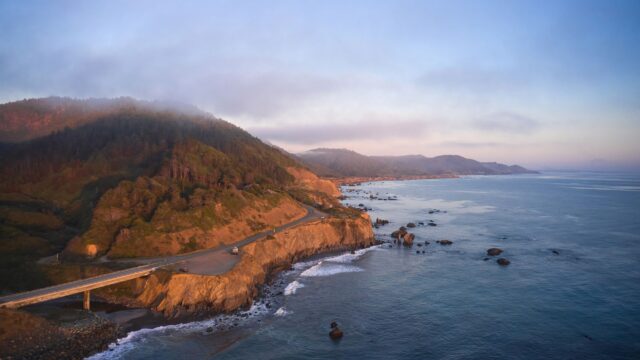
Pick up a new rental car and drive south through Santa Cruz to Monterey and Carmel (Day 11), then along Highway 1 through Big Sur to Cambria or San Luis Obispo (Day 12). Highway 1 in Big Sur has had long landslide closures in recent years, so check Caltrans road conditions before you set your route; if it is closed, use US-101 inland and visit Big Sur from the open end. Our Pacific Coast Highway itinerary covers the stops in detail.
Days 13–14: Los Angeles
Continue through Santa Barbara to Los Angeles. See Santa Monica and Venice Beach, the Griffith Observatory at sunset and Hollywood, or choose a theme park. Fly home from LAX on Day 14.
Should you fly or drive between stops?
For a first trip, combining flights and car rentals usually saves time and money compared with one long road trip.
| Approach | Pros | Cons |
|---|---|---|
| Fly coast to coast, then rent cars in the West (this plan) | Saves 4–5 driving days; one-way car fees avoided by returning cars | Two rental pickups, airport time |
| One rental from Las Vegas to Los Angeles | Fewer pickups; flexible coastal drive | One-way fees between states can be high; 9 hr drive Las Vegas to San Francisco |
| Cross-country road trip | See the Midwest and Route 66 | Needs 3–4 weeks; very long driving days |
How do US time zones affect this trip?
- New York is on Eastern Time. Las Vegas, San Francisco and Los Angeles are on Pacific Time, 3 hours behind New York.
- Arizona, including the Grand Canyon, stays on Mountain Standard Time all year and does not use daylight saving time. From March to early November, Arizona shows the same clock time as Las Vegas; in winter it is one hour ahead.
- The Navajo Nation in northeastern Arizona does observe daylight saving time, so tours there can be an hour different in summer.
Flying west is easier on jet lag than flying east. Schedule your first New York day lightly if you arrive from Europe or Asia.
What should international visitors check before the trip?
Entry rules for the United States depend on your nationality and change from time to time. Check the official State Department US visas pages, or the official travel authorization site if your country is in the Visa Waiver Program, well before you book. We do not give visa advice beyond that.
- National park fees: since January 1, 2026, non-US residents age 16 and older pay an extra $100 per person at 11 of the most visited national parks, including Grand Canyon, on top of the $35 vehicle fee, unless they hold the $250 nonresident America the Beautiful annual pass. The National Park Service FAQ lists the parks. Our guide to what international visitors pay at US national parks explains when the pass pays off.
- Driving: rental companies set their own rules for foreign licenses; ask whether you need an International Driving Permit. Drivers under 25 usually pay a daily surcharge.
- Prices: sales tax is added at the register, hotels often add resort or destination fees, and restaurant tips of 15 to 20 percent are customary.
- Health: medical care is expensive; buy travel insurance that covers the US.
What should you book ahead?
- Flights: New York to Las Vegas and Las Vegas to San Francisco, 1 to 3 months ahead.
- Grand Canyon lodging: in-park rooms often open about 13 months ahead and sell out for spring and fall.
- Statue of Liberty ferry: 2 to 8 weeks ahead in busy seasons, longer for crown access.
- Muir Woods: check whether a parking or shuttle reservation is required for your dates.
- Broadway tickets and observation decks: a few days to weeks ahead.
How much does 2 weeks in the USA cost?
Rough planning ranges for two travelers sharing a room, excluding international flights, as of November 2026. New York and San Francisco hotels are the biggest expense.
| Item | Budget | Mid-range | Comfort |
|---|---|---|---|
| Lodging (13 nights) | $2,000–3,000 (hostels, motels, outer boroughs) | $3,800–5,800 (3-star hotels) | $7,500–12,000 (4- to 5-star) |
| Domestic flights for two | $400–700 | $600–1,000 | $1,200–2,500 (premium cabins) |
| Car rentals (7 days total), fuel, parking | $600–900 | $800–1,200 | $1,200–1,900 |
| Food for two | $900–1,300 | $1,700–2,600 | $3,000–4,800 |
| Sights, park fees, shows | $300–500 | $700–1,200 | $1,500–3,000 |
| Total for two | $4,200–6,400 | $7,600–11,800 | $14,400–24,200 |
Non-US residents should add $200 for two adults at Grand Canyon, or $250 for the nonresident annual pass, which also covers the vehicle fee.
What if you have less or more time?
With 10 days: skip the coastal drive and fly from San Francisco to Los Angeles, or skip Los Angeles and fly home from San Francisco.
With 3 weeks: add Washington, DC by train after New York, and Zion and Bryce Canyon between Las Vegas and the Grand Canyon (check Zion’s park alerts first, since rockfall and flash-flood closures can shut popular areas such as the Riverside Walk and The Narrows), or Yosemite between San Francisco and the coast.
Bottom line
For a first trip, two weeks fits New York City plus a western loop of Las Vegas, the Grand Canyon, San Francisco, the California coast and Los Angeles. Fly coast to coast, rent cars only where you need them, plan for a 3-hour time difference and Arizona’s no-daylight-saving rule, check official entry rules early, and budget for the $100 nonresident park fee.
FAQ
Is 2 weeks enough to see the USA?
Two weeks is enough for one East Coast city and a western region with a national park, not for the whole country. The US is about the size of Europe, so most visitors choose two areas and fly between them. Keep track of where you have been on our states I’ve visited map.
Should I rent a car for my first trip to the USA?
Not in New York, where the subway is faster and parking is costly. In the West, a car is the easiest way to reach the Grand Canyon and the California coast. Check age rules and license requirements with the rental company.
How long is the flight from New York to the West Coast?
Nonstop flights from New York take about 5 to 5.5 hours to Las Vegas and 5.5 to 6.5 hours to Los Angeles or San Francisco. Flights heading east are usually shorter because of prevailing winds.
Do foreign visitors pay more at US national parks?
Yes, at some parks. Since January 1, 2026, non-US residents age 16 and older pay an extra $100 per person at 11 heavily visited parks, including Grand Canyon, Yosemite and Yellowstone, unless they buy the $250 nonresident annual pass.