Olympic National Park Guide: Hoh, Hurricane Ridge and Ruby Beach
Rain forest, mountains and wild coast in one park, each reached separately off US-101. How many days to plan, where to sleep and what changed at Hurricane Ridge.
Olympic National Park in Washington needs 3–4 days to see its three main landscapes: the Hoh Rain Forest, the mountain views at Hurricane Ridge and the wild Pacific beaches such as Ruby Beach. The park is reached by looping US-101 around the Olympic Peninsula, about 330 miles in total. Entry costs $30 per vehicle for 7 days as of November 2026.
No road crosses the park’s mountain core, so every area is a separate drive off US-101. July through September is the driest and most reliable time to visit, and the Hurricane Ridge Day Lodge, which burned in 2023, has not been rebuilt yet.
How many days do you need in Olympic National Park?
Plan 3 days for the highlights and 4–5 days to add Lake Quinault, Sol Duc and slower beach time. One day only works if you pick a single area, such as Hurricane Ridge from Port Angeles.
| Trip length | What fits | Where to sleep |
|---|---|---|
| 1 day | Hurricane Ridge and Lake Crescent | Port Angeles |
| 2 days | Day 1 Hurricane Ridge and Lake Crescent; day 2 Hoh Rain Forest and Rialto or Ruby Beach | Port Angeles, then Forks |
| 3 days | Add Ruby Beach, Kalaloch and the Quinault Rain Forest | Port Angeles, Forks, Lake Quinault area |
| 4–5 days | Add Sol Duc Falls, Cape Flattery outside the park, longer hikes and tide pooling | Split nights between the north, west and south sides |
What is the status of Hurricane Ridge and its lodge?
Hurricane Ridge is open, but the Day Lodge burned in May 2023 and is still in the pre-design stage as of November 2026. The park awarded a design contract in September 2025 and says construction could start in 2028 at the earliest, with building limited to a short May–September window each year.
- What is there now: temporary restrooms and a visitor contact station, plus the views and trails.
- The drive: about 17 miles uphill from Port Angeles to a ridge above 5,000 feet.
- Hikes: the Hurricane Hill trail is the most popular walk, with views of Mount Olympus and the Strait of Juan de Fuca on clear days.
- Summer work: in 2026 the area closed on weekdays for several weeks after Memorial Day for water and utility work, so check alerts before you go.
- Winter: in recent winters, the road opened to uphill traffic only on Fridays through Sundays and some holidays, roughly 9 a.m.–4 p.m., weather permitting. Chains may be required.
Follow progress on the park’s Hurricane Ridge Day Lodge project page.
How do you visit the Hoh Rain Forest?
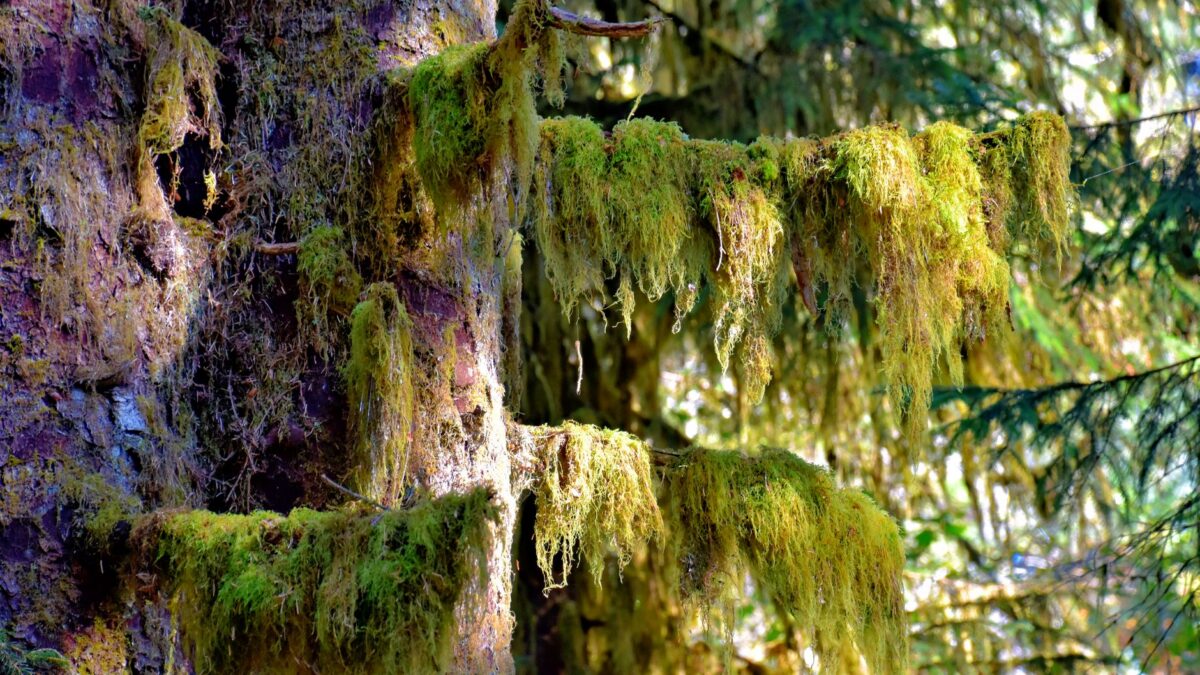
The Hoh Rain Forest is reached by the Upper Hoh Road, about 18 miles inland from US-101 south of Forks. The Hoh area receives roughly 12–14 feet of rain a year, which feeds the moss-draped bigleaf maples and Sitka spruce.
- Trails: the Hall of Mosses loop (about 0.8 mile) and the Spruce Nature Trail (about 1.2 miles) start at the visitor center; the long Hoh River Trail continues up the valley.
- Timing: parking is limited and fills on summer days, so arrive early in the morning or late in the afternoon.
- Road status: the Upper Hoh Road has washed out more than once; a December 2024 washout closed the Hoh until May 2025. Check the park’s current road conditions page before driving out.
What are the best Olympic beaches, including Ruby Beach?
Ruby Beach, south of Forks on US-101, is the easiest coastal stop, with sea stacks, driftwood and a short trail down from the parking lot. Rialto Beach near La Push and the Kalaloch beaches are the other main choices.
| Beach | Access | Known for |
|---|---|---|
| Ruby Beach | Short walk from a US-101 parking lot | Sea stacks, reddish sand, sunsets |
| Rialto Beach | Off La Push Road west of Forks | Driftwood, the Hole-in-the-Wall arch at low tide |
| Kalaloch beaches | Several pullouts along US-101 | Tide pools, the “Tree of Life” spruce, lodge nearby |
| Second and Third Beach | Forest trails near La Push | Quieter coves and sea stacks |
Coastal safety: carry a tide table, since some headlands and arches can only be passed at low tide. Stay off large drift logs near the water, because waves can roll them, and watch for sneaker waves that run farther up the beach than the rest.
How do you loop US-101 around the Olympic Peninsula?
Most visitors drive the loop clockwise from Seattle: ferry or drive to Port Angeles, head west to Forks and the coast, then south to Lake Quinault and back toward Olympia. The full loop is about 330 miles before side roads.
- Seattle to Port Angeles: about 2.5 hours via a Puget Sound ferry or around by road; base here for Hurricane Ridge.
- Port Angeles to Lake Crescent: about 30 minutes west; walk to Marymere Falls.
- Lake Crescent to Sol Duc: a short detour south to Sol Duc Falls and the hot springs resort.
- Forks: about 1.5 hours from Port Angeles; base for Rialto Beach and the Hoh.
- Forks to the Hoh Rain Forest: about 50 minutes each way.
- Forks to Ruby Beach and Kalaloch: about 30–45 minutes south.
- Kalaloch to Lake Quinault: about 45 minutes; rain forest loops and the Quinault valley.
- Lake Quinault to Seattle: about 3 hours via Aberdeen and Olympia.
Fuel and groceries are limited between Port Angeles and Aberdeen, so fill up in Port Angeles, Forks or Amanda Park. Drive times are estimates without stops; summer traffic and road work can add more. For a longer plan, see our 10-day Pacific Northwest road trip or the 14-day West Coast road trip that starts here.
When is the best time to visit Olympic?
July through September has the driest weather, the longest days and full access to Hurricane Ridge trails. Spring and fall are quieter and greener but wetter, and winter brings heavy rain on the coast and snow at Hurricane Ridge.
| Season | Weather | Access |
|---|---|---|
| Summer (Jul–Sep) | Driest; coastal fog in the mornings | Everything open; busiest at the Hoh |
| Fall (Oct–Nov) | Rain returns; fall color around Lake Crescent and Quinault | Some facilities reduce hours |
| Winter (Dec–Mar) | Storms on the coast, snow in the mountains | Hurricane Ridge on a limited schedule; storm closures possible |
| Spring (Apr–Jun) | Showers, rivers running high | Higher trails still snowy into June |
How much does Olympic National Park cost?
Olympic charges $30 per vehicle, $25 per motorcycle and $15 per person on foot or bike, each valid for 7 days, and visitors 15 and under enter free, as of November 2026. An Olympic annual pass costs $55.
Olympic is not on the list of 11 parks with the 2026 nonresident surcharge, so international visitors pay the standard fee. Lodging inside the park is limited to a few concession lodges, such as Lake Crescent, Sol Duc and Kalaloch; most visitors stay in Port Angeles, Sequim or Forks.
Bottom line
Give Olympic 3–4 days, loop US-101 clockwise, and split nights between Port Angeles and Forks. Visit in July–September for the best odds of dry weather, check road status for the Upper Hoh and Hurricane Ridge before each drive, and expect no lodge at Hurricane Ridge for several more years.
FAQ
Is Hurricane Ridge open without the lodge?
Yes. The road, viewpoints and trails are open in season, with temporary restrooms and a contact station. Winter access has been limited to weekends and some holidays, weather permitting.
Do you need a reservation for Olympic National Park?
No. As of November 2026, Olympic has no timed-entry system. Reservations are needed for campgrounds that take them, lodges and overnight wilderness permits.
Can you see Olympic National Park in one day?
You can see one area well, not the whole park. From Seattle, Hurricane Ridge with Lake Crescent is the most practical day trip.
What should you pack for the Hoh Rain Forest?
Bring a rain jacket and waterproof shoes in any season. Trails near the visitor center are mostly flat but can be muddy.