Yellowstone vs Grand Teton: Differences, Distance and Splitting Days
Yellowstone and Grand Teton share a border but offer very different trips. This comparison covers what each park does best, how far apart the highlights are, separate fees, where to stay and how to divide your days.
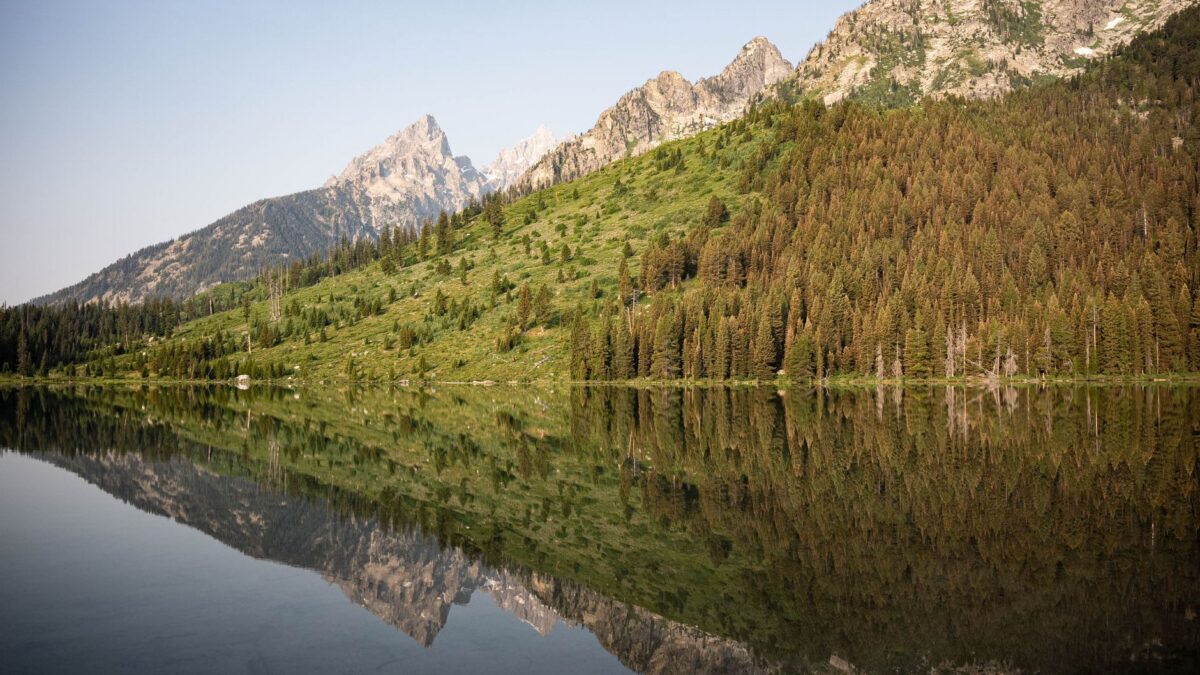
Yellowstone is best for geysers, hot springs and big-animal wildlife, while Grand Teton is best for jagged mountain views, lakes and hiking close to the peaks. The parks are connected by an 8-mile parkway but charge separate entrance fees, $35 per vehicle each as of November 2026. Most travelers give Yellowstone about two-thirds of their time and Grand Teton one-third.
Both parks are in northwest Wyoming, and Yellowstone also reaches into Montana and Idaho. In 2025 the National Park Service counted 4,762,988 recreation visits to Yellowstone and 3,800,648 to Grand Teton, making them the third and eighth most visited national parks.
What is the difference between Yellowstone and Grand Teton?
Yellowstone is a huge volcanic plateau with more than 10,000 hydrothermal features; Grand Teton is a much smaller park built around a single mountain range rising straight out of a valley. The table compares the essentials.
| Factor | Yellowstone | Grand Teton |
|---|---|---|
| Established | 1872, the first national park | 1929, expanded in 1950 |
| Size | About 2.2 million acres | About 310,000 acres |
| Best known for | Old Faithful, Grand Prismatic Spring, Grand Canyon of the Yellowstone | Teton Range, Jenny Lake, Jackson Lake, Snake River views |
| Wildlife | Bison, elk, wolves, grizzly and black bears | Moose, elk, bison, pronghorn, bears |
| Driving | 142-mile Grand Loop; 1–2 hours between areas | Compact; most sights within 45 minutes of Jackson |
| Hiking | Boardwalks, canyon rims, long backcountry trails | Lake and canyon trails right below the peaks |
| Vehicle entry (7 days) | $35 | $35, paid separately |
| Days needed | 3 to 4 | 1 to 2 |
| Nearest airports | Bozeman, West Yellowstone (seasonal), Cody, Jackson | Jackson Hole Airport, inside the park |
| 2025 recreation visits | 4,762,988 | 3,800,648 |
How far apart are Yellowstone and Grand Teton?
Grand Teton’s northern edge and Yellowstone’s South Entrance are linked by the John D. Rockefeller, Jr. Memorial Parkway, about 8 miles of road. The real distances that matter are between the highlights:
| Route | Approximate distance | Driving time without stops |
|---|---|---|
| Jackson to Jenny Lake | About 20 miles | 30 minutes |
| Jackson to Yellowstone South Entrance | About 57 miles | 1 hour 15 minutes |
| Jackson to Old Faithful | About 100 miles | 2 hours 15 minutes to 2 hours 30 minutes |
| Colter Bay to Old Faithful | About 60 miles | 1 hour 30 minutes |
| Old Faithful to Canyon Village | About 40 miles | 1 hour |
| Canyon Village to Lamar Valley | About 35 miles | 1 hour |
In summer, traffic, construction and animal jams often add 30 minutes or more to any drive in Yellowstone. The road from Grand Teton into Yellowstone’s south side is usually open to cars only from mid-May to early November; check the Yellowstone road status page for exact dates.
Do you pay separately for Yellowstone and Grand Teton?
Yes. Grand Teton’s official fee page confirms that visitors driving to or from Yellowstone pay a separate entrance fee for each park. As of November 2026, each park charges $35 per private vehicle, $30 per motorcycle and $20 per person on foot or bicycle, valid for seven days. Each park also sells its own $70 annual pass.
For U.S. residents, the $80 America the Beautiful pass covers both parks and usually pays for itself on a trip that includes a third park. Since January 1, 2026, both parks also charge visitors who are not U.S. residents an extra $100 per person aged 16 and older, waived only for holders of the $250 nonresident annual pass, so international visitors save money with that pass on any two-park trip.
What is Yellowstone best for?
Yellowstone is best for thermal features and wildlife that you cannot see anywhere else in the Lower 48 in such numbers. Plan your days around its regions:
- Old Faithful and Upper Geyser Basin: predictable eruptions and miles of boardwalk past geysers and pools.
- Midway Geyser Basin: Grand Prismatic Spring, the largest hot spring in the United States, best seen from the overlook trail near Fairy Falls trailhead.
- Canyon Village: Lower Falls of the Yellowstone River and Artist Point.
- Hayden and Lamar valleys: bison herds, elk, and wolves at dawn and dusk.
- Mammoth Hot Springs: travertine terraces and resident elk.
Stay on boardwalks in all thermal areas and keep at least 100 yards from bears and wolves and 25 yards from other animals. Our month-by-month Yellowstone guide explains which roads and animals to expect in each season.
What is Grand Teton best for?
Grand Teton is best for mountain scenery, lakes and hikes with the peaks overhead. The Grand Teton itself rises to 13,775 feet, about 7,000 feet above the valley floor, with no foothills in between.
- Jenny Lake: a boat shuttle across the lake shortens the hike to Hidden Falls and Inspiration Point.
- Oxbow Bend and Schwabacher Landing: classic reflections of Mount Moran and the Tetons at sunrise.
- Mormon Row: historic barns in front of the range.
- Jackson Lake and Signal Mountain: boating, sunset views and a summit road.
- Moose-Wilson Road: a narrow, slow road known for moose and bear sightings.
Teton Park Road, the inner road along the lakes, is usually open to cars from May through October, while US-89/191 through the valley stays open all year.
Where should you stay for both parks?
The easiest plan is two bases: Jackson or the Grand Teton lodges for the Teton part of the trip, then one or two bases inside or near Yellowstone. Staying only in Jackson means a 4- to 5-hour round trip each day to see Yellowstone’s geysers.
- Grand Teton side: Jackson, Teton Village, or in-park options at Jackson Lake Lodge, Jenny Lake Lodge, Colter Bay Village, Signal Mountain Lodge and Headwaters Lodge at Flagg Ranch.
- Yellowstone south and west: Grant Village or Old Faithful lodges inside the park, or West Yellowstone, Montana.
- Yellowstone north and east: Canyon Lodge, Mammoth Hot Springs Hotel, or Gardiner and Cooke City in Montana.
In-park lodges in both parks often fill months ahead for July and August. Our Jackson Hole guide compares Jackson with Teton Village as a base.
How should you split your days?
Give Grand Teton one or two days and Yellowstone at least three. Suggested splits:
- 3 days: one day in Grand Teton (Jenny Lake, Oxbow Bend, Mormon Row), then two days in Yellowstone focused on the geyser basins and Canyon.
- 5 days: one and a half days in Grand Teton and three and a half in Yellowstone, adding Lamar Valley and Mammoth. Our 5-day Yellowstone and Grand Teton itinerary lays this out day by day.
- 7 days: two days in Grand Teton with a longer hike or float trip, and five days in Yellowstone with nights in two different areas.
Start in Grand Teton if you fly into Jackson, and end with Yellowstone’s north side if you fly out of Bozeman; one-way car rentals between the two airports may cost extra.
Bottom line
See Yellowstone for geysers and wildlife and Grand Teton for mountains and lakes; if you have five days or more, see both. Budget two separate entrance fees or one annual pass, book in-park lodging early, and give Yellowstone most of your time because its sights are spread far apart.
FAQ
Is Grand Teton worth it if you are going to Yellowstone?
Yes. Grand Teton is only about an hour from Yellowstone’s South Entrance and offers mountain scenery that Yellowstone lacks, so even one day there adds a lot to the trip.
Can you see Yellowstone and Grand Teton in one day?
You can drive through both, but you will see only a few roadside stops. A loop from Jackson to Old Faithful and back is about 200 miles before any side trips.
Which park is better for wildlife?
Yellowstone has more wildlife overall, including wolves and large bison herds. Grand Teton is often better for moose, especially along the Moose-Wilson Road and the Gros Ventre River.
Is the America the Beautiful pass worth it for these two parks?
Not for these two parks alone: two $35 vehicle passes cost $70, which is $10 less than the $80 pass. It pays off once you add a third fee park, such as Glacier or Rocky Mountain, within 12 months.