Hawaii Volcanoes National Park Guide: Lava Viewing, Roads and Safety
How Kilauea's episodic eruption affects what you will see, what to drive on the summit and down to the sea, and where to stay on the Big Island.
Hawaiʻi Volcanoes National Park on the Big Island is worth one to two full days: drive the open sections of Crater Rim Drive around Kīlauea’s summit, then the 19-mile Chain of Craters Road down to the sea. Whether you can see lava depends on Kīlauea’s current activity, so check the USGS Hawaiian Volcano Observatory before you go. Entry costs $30 per vehicle for 7 days as of November 2026.
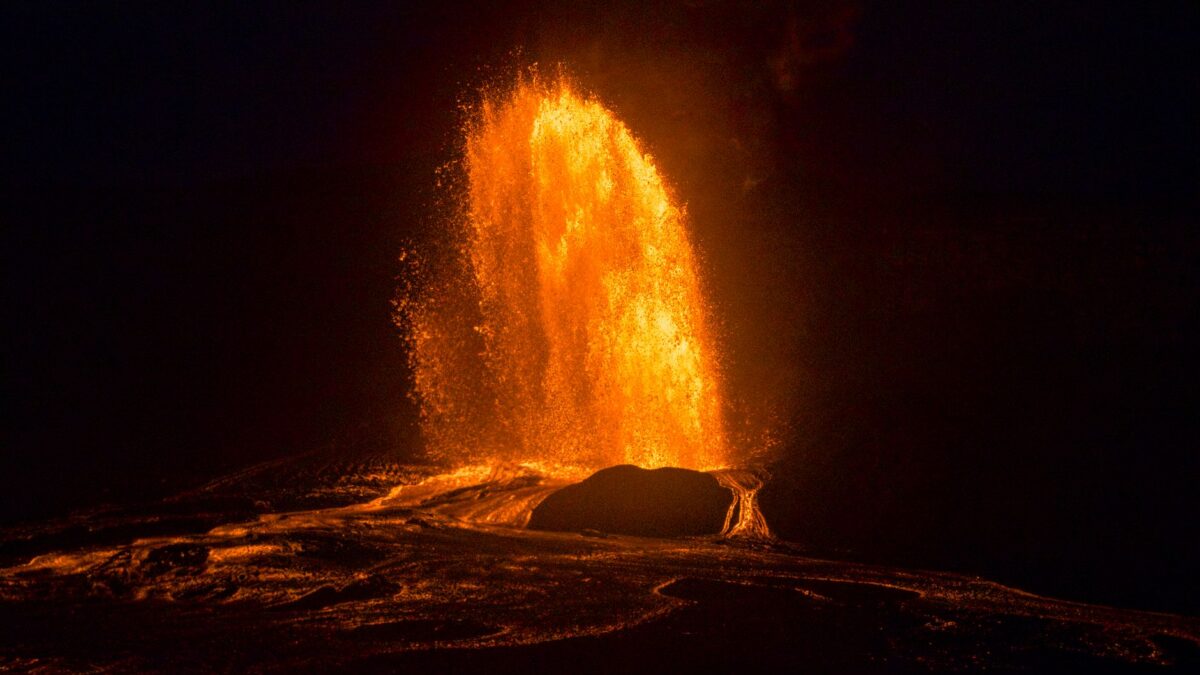
Since December 23, 2024, Kīlauea’s summit eruption inside Halemaʻumaʻu crater has come in episodes of lava fountaining separated by pauses. By late October 2026, USGS had counted 55 episodes and reported the eruption paused while the summit continued to inflate. During an episode the glow can be seen from overlooks on the caldera rim; between episodes there may be no visible lava at all.
Can you see lava at Hawaiʻi Volcanoes right now?
Sometimes. Lava is visible only during an active fountaining episode, and episodes have often lasted from several hours to about a day, with pauses of days to weeks between them. USGS publishes forecast windows for the next episode, but timing can shift.
- Check the status: read the latest update on the USGS Kīlauea page the day before and the morning of your visit.
- Check park closures: the park’s current conditions page lists open overlooks and roads. Tephra fallout has closed overlooks such as Uēkahuna and Kīlauea Overlook during some episodes.
- Go after dark: during an episode, the glow is strongest from dusk to before dawn. Parking at popular overlooks fills quickly.
- Use open viewpoints only: the eruption area itself is closed because of serious hazards.
Even without lava, the summit has steaming vents, a vast collapsed caldera and fresh lava fields from recent eruptions.
What is there to see on Crater Rim Drive?
Crater Rim Drive circles part of Kīlauea’s summit caldera; sections have been closed since the 2018 collapse and after recent episodes, so drive only the open parts.
| Stop | What it is | Time |
|---|---|---|
| Kīlauea Visitor Center | Maps, ranger updates, eruption status board | 20–30 minutes |
| Steam vents and Sulphur Banks | Volcanic steam and mineral deposits along a short trail | 20–40 minutes |
| Uēkahuna overlook | Wide view of the caldera and Halemaʻumaʻu | 20–30 minutes |
| Kīlauea Iki | Overlook of a 1959 lava lake; roughly 3.3-mile loop trail across the crater floor | 15 minutes to 3 hours |
| Nāhuku (Thurston Lava Tube) | Walk-through lava tube in rain forest | 30 minutes |
| Keanakākoʻi and Devastation Trail | Crater views and a paved path through cinder fields | 30–60 minutes |
After eruption episodes, the park has sometimes reopened areas in stages; in early 2026, for example, Nāhuku reopened with its lights out, so a flashlight was needed.
How do you drive Chain of Craters Road?
Chain of Craters Road runs 19 miles from Crater Rim Drive down about 3,700 feet to the coast, ending where lava flows covered the old road. Allow 2–3 hours for the round trip with stops; there is no fuel, food or drinking water along it.
- Pit craters: several roadside craters in the upper section.
- Mauna Ulu: lava fields from a 1969–1974 eruption, with a trail across them.
- Kealakomo overlook: a high view over the coastline.
- Puʻu Loa petroglyphs: a boardwalk to thousands of rock carvings; stay on the boardwalk.
- Hōlei Sea Arch: a lava-rock arch near the road’s end.
The coast is hot, sunny and windy even when the summit is cool and rainy, so carry water and sun protection.
How do you stay safe at Hawaiʻi Volcanoes?
Stay on marked trails and behind barriers, because cliff edges and ground cracks around the caldera can collapse. Volcanic gas (vog) and sulfur dioxide can affect people with heart or breathing problems, pregnant visitors, infants and young children.
- Gas: if you have breathing or heart conditions, avoid areas with high gas levels such as Sulphur Banks and the steam vents when the air is heavy.
- Tephra: during fountaining, volcanic glass fragments can fall downwind; follow closures.
- Weather: the summit sits near 4,000 feet and is often cool, wet and foggy; bring a rain layer.
- Coast: do not approach sea cliffs or active lava entries if they occur; benches can collapse without warning.
- Driving: watch for nēnē, the endangered Hawaiian goose, on park roads.
The park’s safety page explains current hazards in more detail.
How much does Hawaiʻi Volcanoes cost?
Hawaiʻi Volcanoes charges $30 per private vehicle, $25 per motorcycle and $15 per person on foot or bike, each valid for 7 days, as of November 2026. The Hawaiʻi Tri-Park Annual Pass costs $55 and also covers Haleakalā and Puʻuhonua o Hōnaunau.
The park is not on the list of 11 parks with the 2026 nonresident surcharge. The America the Beautiful pass ($80 for U.S. residents, $250 for nonresidents) also covers entry.
Should you stay in Hilo, Kona or Volcano village?
Stay in Volcano village for the easiest night viewing, in Hilo for a 45-minute drive with more services, or in Kona for beaches and sun, accepting a long drive of about 2–2.5 hours each way.
| Base | Drive to the park | Pros | Cons |
|---|---|---|---|
| Volcano village | Minutes | Easy evening and early-morning visits | Cool, rainy, few restaurants |
| Hilo | About 45 minutes (30 miles) | Groceries, waterfalls, farmers market | Rainy side of the island |
| Kona / Kohala Coast | About 2–2.5 hours | Sunny beaches, most resorts, main airport | Long round trip; tiring after a night visit |
| Inside the park | None | Volcano House on the caldera rim, plus campgrounds | Limited rooms; book early |
If you split a week between islands, see our 7-day two-island Hawaii itinerary, and for overall costs, our guide to how much a Hawaii trip costs.
Bottom line
Give Hawaiʻi Volcanoes at least one full day, ideally with a night in Volcano or Hilo so you can return after dark if an episode starts. Check the USGS eruption update and the park’s closures first, drive the open parts of Crater Rim Drive and Chain of Craters Road, and treat any lava view as a bonus rather than a promise.
FAQ
Is Kīlauea erupting right now?
Kīlauea has been in an episodic summit eruption since December 2024, with pauses between fountaining episodes. Whether lava is visible today depends on the current episode, so check USGS HVO updates on the day of your visit.
How long does it take to see Hawaiʻi Volcanoes?
One full day covers Crater Rim Drive and Chain of Craters Road. Two days allow the Kīlauea Iki hike, slower stops and a night visit to the overlooks.
Can you visit Hawaiʻi Volcanoes as a day trip from Kona?
Yes, but it is a long day with about 4–5 hours of driving round trip. Staying one night in Volcano or Hilo makes evening viewing much easier.
What should you bring?
Bring a rain jacket and warm layer for the summit, sun protection and water for the coast, a flashlight for lava tubes and night walks, and closed-toe shoes for sharp lava rock.