Yellowstone in 3 Days: Loops, Old Faithful Timing, Lodging
Spend three days in Yellowstone by driving the Grand Loop in sections, catching Old Faithful on its roughly 90-minute cycle, and choosing where to sleep.
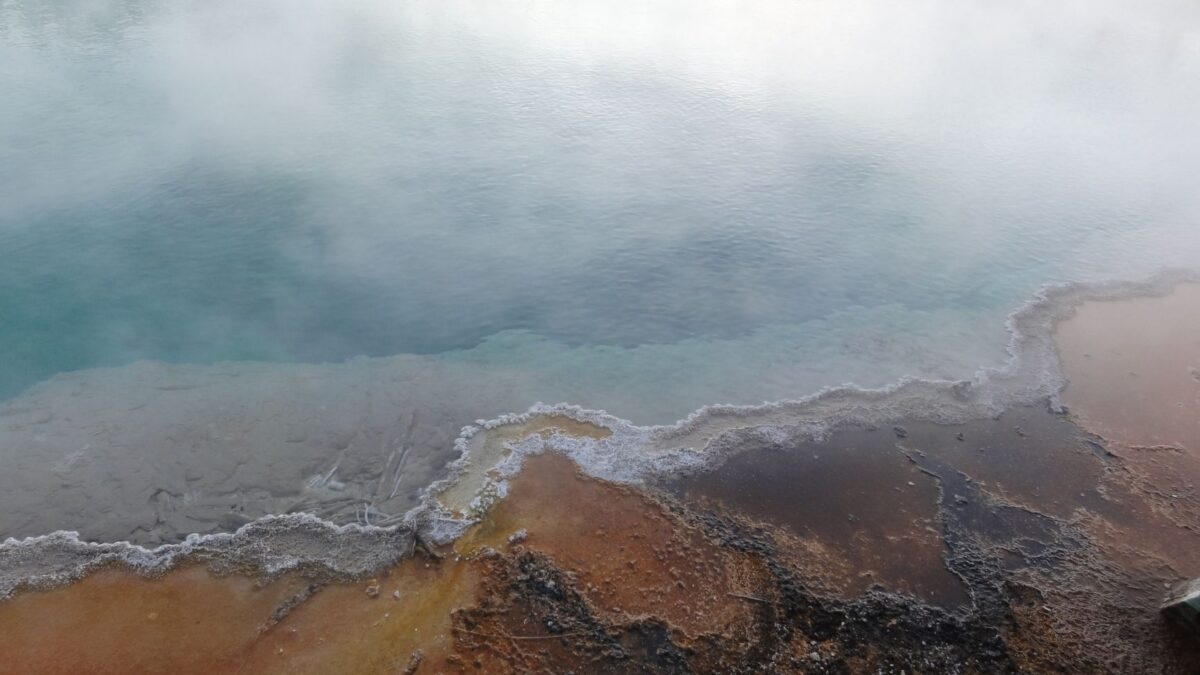
Three days is enough to see Yellowstone’s main sights if you drive the Grand Loop, the park’s figure-eight road of about 142 miles (229 km), in sections instead of in one push. Old Faithful erupts about every 90 minutes, give or take, and the National Park Service posts predicted eruption times at the Old Faithful area, so you can arrive shortly before the next window. Sleeping inside the park saves hours of driving, while gateway towns offer more rooms.
How do you split three days on the Grand Loop?
Give each day one area: geysers, canyon and lake, then the north. Speeds are low, wildlife stops traffic, and most drives between sights take an hour or more, so two or three stops a day is realistic.
- Day 1, geyser basins: Enter at West Yellowstone and head for Madison, then Midway Geyser Basin (Grand Prismatic Spring) and the Upper Geyser Basin around Old Faithful. Norris Geyser Basin fits on the way back or on day 2.
- Day 2, canyon and lake: Drive east to West Thumb and Yellowstone Lake, then north through Hayden Valley, a common place to see bison, to the Grand Canyon of the Yellowstone with its two waterfalls.
- Day 3, the north: Visit Mammoth Hot Springs and its terraces, then continue to Tower-Roosevelt and Lamar Valley, where early morning and evening are the usual times for wildlife.
If you only have time for one section of the loop, the lower loop (the geysers and the lake) holds the most famous features. For a longer trip that adds the neighboring park, see this 5-day Yellowstone and Grand Teton itinerary.
When should you see Old Faithful?
Check the predicted time at the visitor center or on the National Park Service’s Yellowstone page and be seated on the boardwalk 15 to 20 minutes early. The prediction is a window, not a fixed time, because intervals vary.
The geyser erupts all day, so you do not need a special hour. Mid-morning and late afternoon are often easier for parking and seating than midday, when tour traffic peaks. After the eruption, walk the Upper Geyser Basin boardwalks to see other geysers, which have their own predictions at the visitor center.
Where should you stay inside the park?
Inside the park, lodging sits in a few developed areas: Old Faithful, Canyon, Lake and Mammoth Hot Springs, plus campgrounds. Staying at Old Faithful puts you steps from the geysers on day 1, and Canyon or Lake sets up day 2. Rooms fill months ahead for summer, and the rules are in this guide to booking a room inside a national park.
Inside lodging has trade-offs. Rooms are simple, many lack air conditioning and televisions, and cell service is limited across much of the park.
Where should you stay outside the park?
Gateway towns give you more rooms, restaurants and gas stations, but each adds driving time at the start and end of the day. Pick the town for the day you want to do first.
- West Yellowstone, Montana, sits at the West Entrance, closest to the geyser basins.
- Gardiner, Montana, sits at the North Entrance, near Mammoth Hot Springs and the route to Lamar Valley.
- Cooke City, Montana, is just outside the Northeast Entrance, closest to Lamar Valley.
- Cody, Wyoming, is the usual base for the East Entrance.
- Jackson, Wyoming, and the Grand Teton area lie south of the park. This overview of Yellowstone vs Grand Teton explains how the two fit together.
What should you know about season and safety?
Most park roads close to regular cars in winter, and the road from the North Entrance to Cooke City is the usual exception. Spring and fall can bring snow on high passes, so check road status with the park before you go. Winter details are in this list of national parks in winter and which roads stay open.
Park rules require you to stay at least 100 yards (91 m) from bears and wolves and at least 25 yards (23 m) from other wildlife, including bison. In thermal areas, stay on boardwalks and trails, because the ground can be thin and the water is scalding. Pets are not allowed on boardwalks or trails.
Quick answers
Is three days enough for Yellowstone?
Three days covers the main highlights: the geyser basins, the canyon and lake, and the north. It will not leave room for hiking longer trails or a slow wildlife day.
Do you have to drive the whole Grand Loop?
No. You can do the sections separately and return to the same lodging each night, which limits packing and unpacking, though driving distances still add up.
Should you fill the gas tank before entering?
Yes. Fuel stations inside the park are few and far apart, so start each day with a full or nearly full tank.
Can you see Old Faithful in winter?
Yes, but access changes, since most roads are closed to cars and visitors typically arrive by guided vehicle. Check the National Park Service before planning.