Yellowstone and Grand Teton Itinerary: 5 Days, Loop by Loop
A five-day plan that starts under the Tetons, works north through Yellowstone's geyser basins and canyon, and ends with dawn in Lamar Valley, with the bases, road dates and fees that shape it.
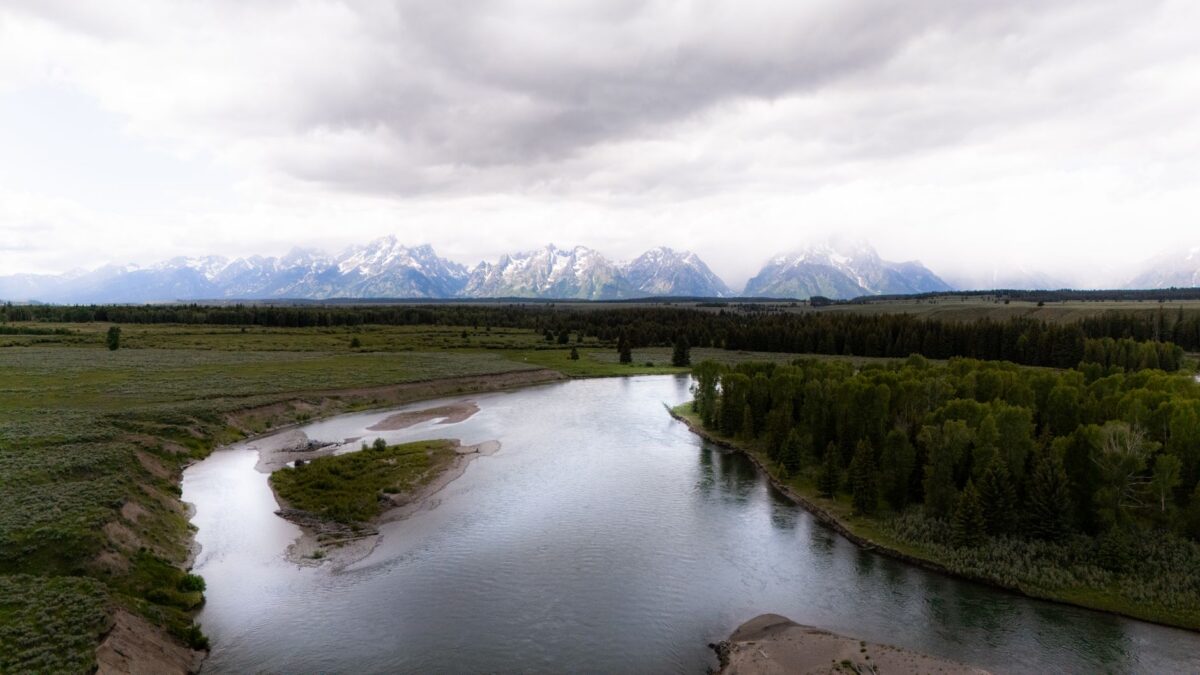
Five days is enough for Grand Teton and Yellowstone if you give Grand Teton one full day and Yellowstone four: Old Faithful and Grand Prismatic, the Grand Canyon of the Yellowstone, Hayden Valley and Lamar Valley. Fly into Jackson and out of Bozeman, travel between June and September, and book in-park lodging as early as possible.
The route runs south to north, so you never backtrack. It sleeps one night near Grand Teton, one or two near Old Faithful and one or two at Canyon.
How should you split 5 days between the two parks?
Grand Teton is compact: one day covers Jenny Lake, the main viewpoints and a sunset. Yellowstone is about 3,500 square miles with a 142-mile Grand Loop Road, so it gets the rest. The parks are joined by the John D. Rockefeller, Jr. Memorial Parkway.
| Leg | Distance | Drive time (no stops) |
|---|---|---|
| Jackson to Jenny Lake | about 22 miles | 35–45 minutes |
| Jackson to Yellowstone South Entrance | about 57 miles | 1.25–1.5 hours |
| South Entrance to Old Faithful | about 40 miles | 1–1.25 hours |
| Old Faithful to Grand Prismatic | about 7 miles | 15 minutes |
| Old Faithful to Canyon Village (via Norris) | about 42 miles | 1.25 hours |
| Canyon to Lamar Valley (via Dunraven Pass) | about 35 miles | 1–1.25 hours |
| Lamar Valley to Mammoth Hot Springs | about 30 miles | 1 hour |
| Gardiner to Bozeman airport | about 90 miles | 1.5–1.75 hours |
Wildlife jams, road work and full parking lots regularly double these times in July and August.
What should you do each day?
Day 1: Grand Teton
Fly into Jackson Hole Airport, which sits inside Grand Teton National Park. Drive the Teton Park Road to Jenny Lake and take the boat shuttle across the lake for the short hike to Hidden Falls and Inspiration Point. Drive up Signal Mountain in the afternoon and finish at Schwabacher Landing or the Snake River Overlook for sunset. Base: Jackson or a Grand Teton lodge.
Day 2: Into Yellowstone and Old Faithful
Catch sunrise at Mormon Row or Oxbow Bend, then drive north into Yellowstone. Stop at West Thumb Geyser Basin on Yellowstone Lake. At Old Faithful, check the predicted eruption time at the visitor education center; eruptions have recently come roughly every 60 to 100 minutes. Between eruptions, walk the Upper Geyser Basin boardwalks to Morning Glory Pool. Base: Old Faithful area or West Yellowstone.
Day 3: Grand Prismatic and Norris
Walk the Midway Geyser Basin boardwalk at Grand Prismatic Spring, then climb to the overlook from the Fairy Falls trailhead for the classic view from above. Stop at Fountain Paint Pot and Norris Geyser Basin, the park’s hottest geyser basin, on the way to Canyon. Base: Canyon Village.
Day 4: Grand Canyon of the Yellowstone and Hayden Valley
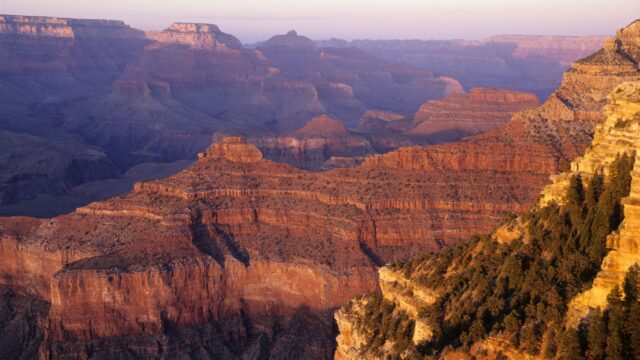
See the Lower Falls from Artist Point and walk down to the Brink of the Lower Falls on the North Rim. In late afternoon, drive south into Hayden Valley, where bison are common and grizzly bears and wolves are sometimes seen. Base: Canyon Village.
Day 5: Lamar Valley, Mammoth and Gardiner
Leave before dawn for Lamar Valley, the best place in the park to look for wolves; bring binoculars. Drive west to Mammoth Hot Springs to walk the travertine terraces, then exit through the Roosevelt Arch at Gardiner and drive to Bozeman for your flight.
Where should you stay, and what should you book ahead?
Stay inside the parks if you can, because it saves hours of driving each day. Yellowstone has nine lodging areas run by one authorized concessioner, and they fill quickly; most are open from about mid-May to early or late October.
| Base | Best for | Trade-off |
|---|---|---|
| Jackson, WY | Grand Teton, restaurants, flights | Expensive in summer; an hour or more from Yellowstone |
| Grand Teton lodges (Jackson Lake, Signal Mountain, Colter Bay) | Sunrise and sunset in the Tetons; closer to Yellowstone | Limited rooms; seasonal |
| Old Faithful area lodges | Geyser basins at quiet hours | Book far ahead |
| West Yellowstone, MT | Cheaper rooms; 30 miles to Old Faithful | Long drives to Canyon and Lamar |
| Canyon Village | Central base for the canyon, Hayden and Lamar valleys | Large, busy complex |
| Gardiner, MT | Mammoth, Lamar Valley; the only year-round road access | Far from Old Faithful |
- In-park lodging: as soon as booking opens, often a year or more ahead for summer.
- Rental car: early, and check the drop fee for Jackson to Bozeman.
- Jenny Lake boat and wildlife tours: a few weeks ahead in July and August.
- Campgrounds: when reservations open on the park and concessioner sites.
When are Yellowstone and Grand Teton roads open?
Most Yellowstone roads are open to cars from mid-April to mid-May through the end of October; the only road open to cars all year is from the North Entrance at Gardiner through Mammoth to Lamar Valley and the Northeast Entrance. From mid-December to mid-March, the interior is open only to snowcoaches and guided snowmobiles. The projected 2027 dates below are from the park’s park roads page; the 2026 spring opening was delayed by a winter storm, so treat them as targets.
| Road section | Projected 2027 opening | Projected closing |
|---|---|---|
| West Entrance to Old Faithful, Norris, Mammoth and Canyon | April 16 | October 31 |
| East Entrance (Sylvan Pass); Canyon to Lake via Hayden Valley | May 7 | October 31 |
| South Entrance to West Thumb and Old Faithful | May 14 | October 31 |
| Dunraven Pass (Canyon to Tower Fall) | May 28 | October 11, sometimes later |
| Grand Teton: Teton Park Road | May 1 | October 31 |
This itinerary needs the South Entrance and Dunraven Pass, so it works from late May to early October. June to September is the best window. For a month-by-month view of weather, crowds and wildlife, see our guide to the best time to visit Yellowstone.
How do you stay safe in thermal areas and around wildlife?
Stay on boardwalks and marked trails in every geyser basin: the ground can be a thin crust over scalding water, and the water in hot springs can cause severe burns. Yellowstone requires you to stay at least 100 yards from bears and wolves and at least 25 yards from all other animals, including bison and elk. Carry bear spray on trails and know how to use it. The park’s safety page covers thermal areas, wildlife and weather, which can bring snow in any month.
How much does this 5-day trip cost?
Yellowstone and Grand Teton charge separate entrance fees: $35 per private vehicle each for 7 days, as of November 2026. For a US resident visiting only these two parks, $70 in fees is cheaper than the $80 America the Beautiful pass. Both parks are on the list of 11 that charge non-US residents age 16 and older an extra $100 per person, so two foreign adults would pay $470 park by park; the $250 nonresident pass covers it, as explained on the NPS nonresident fees page.
For two people sharing a room and a car, plan on roughly $1,800–$2,400 on a budget, $2,900–$3,800 mid-range and $5,000 or more for comfort, excluding flights. These are planning estimates as of November 2026.
| Item | Budget | Mid-range | Comfort |
|---|---|---|---|
| Lodging per night | $150–$230 (gateway motels, simple park cabins) | $250–$400 (park lodges, Jackson hotels) | $450–$800 (Jackson resorts, premium park lodges) |
| Car per day | $70–$110 | $90–$140 | $120–$180 |
| Fuel for about 450 miles | $70–$100 | $70–$100 | $80–$120 |
| Food per person per day | $50–$70 | $80–$110 | $140 or more |
| Fees and tours | $70 (entrance fees) | $150–$300 (boat shuttle, wildlife tour) | $500 or more (private guide, float trip) |
| Rough total for two | $1,800–$2,400 | $2,900–$3,800 | $5,000 or more |
Our breakdown of how much a trip to Yellowstone costs covers flights and camping options.
What if you have less or more time?
- 3–4 days: skip Grand Teton or give it half a day on the way north, and cut Lamar Valley if you fly from Jackson.
- 7 days: add a second Grand Teton day for a longer hike, a night at Lake Village, and the Beartooth Highway beyond the Northeast Entrance when it is open. Our Yellowstone vs Grand Teton comparison helps decide where to add time.
Bottom line
Give Grand Teton one day and Yellowstone four, drive south to north, and sleep inside the parks wherever you can. Book lodging first, travel between June and September when every road on the route is open, and plan your days around early starts for wildlife and empty boardwalks.
FAQ
Is 5 days enough for Yellowstone and Grand Teton?
Yes, for the main sights of both parks. You will see the highlights of each Yellowstone loop, but not the backcountry or Yellowstone Lake’s east side.
Do you need a reservation to enter Yellowstone or Grand Teton?
No entry reservation is required as of November 2026. You need to pay each park’s entrance fee or show a valid pass.
Is it better to stay in West Yellowstone or Gardiner?
West Yellowstone is closer to the geyser basins, while Gardiner is closer to Mammoth and Lamar Valley. On this route, a night in each works if you cannot get in-park rooms.
Which airport is best for this itinerary?
Fly into Jackson Hole and out of Bozeman to avoid backtracking. Salt Lake City is cheaper for flights but adds about five hours of driving each way.