Road Trip Packing List: What to Bring by Season and Region
Documents, a car kit, park-day essentials and region-specific gear: a checklist you can trim to your route, from desert heat to mountain cold.
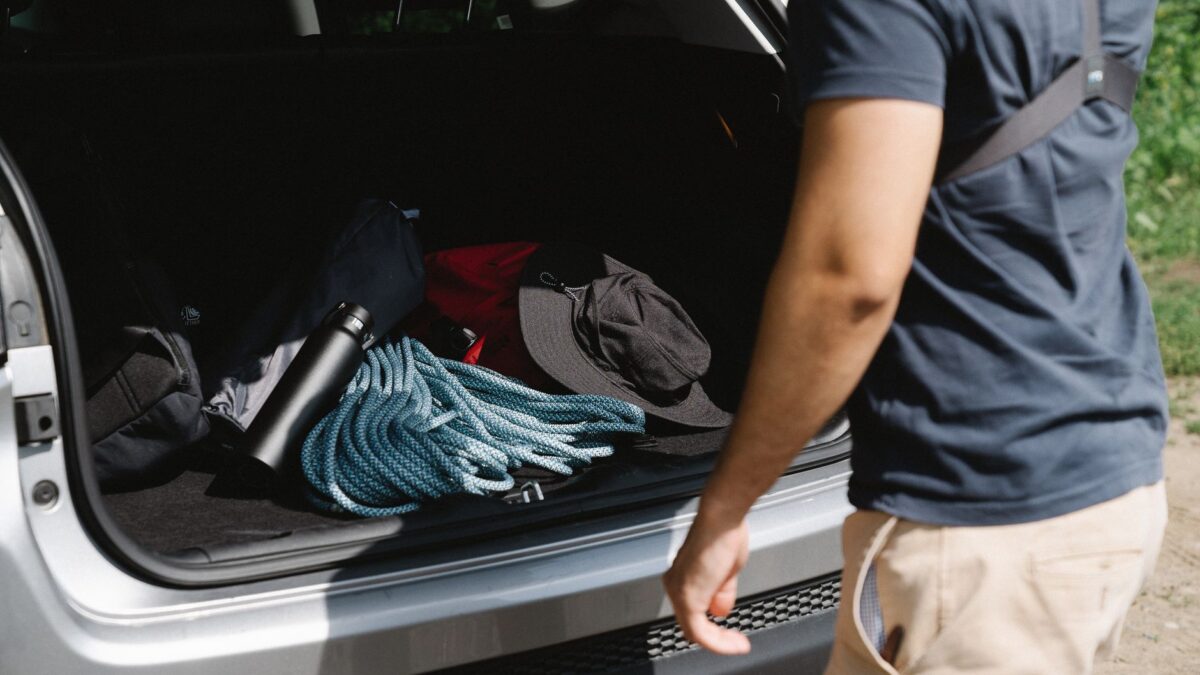
A good U.S. road trip packing list covers four groups: documents and payment, a car safety kit, park-day essentials such as water, layers, sun protection and offline maps, and extra gear for the region, whether that is desert heat, mountain cold or coastal wind and rain. Pack for the highest and coldest point on your route, not the weather where you start. In desert country, carry at least a gallon of water per person per day, as Death Valley National Park advises.
Use the checklists below as a starting point and trim them for your trip. Nothing here requires special gear beyond what most households already own.
What documents and payment should you bring?
Keep the paperwork in one folder or pouch in the car and digital copies on your phone.
- Driver’s license for every driver, plus a REAL ID-compliant license or passport if you will fly on the trip.
- Car documents: registration and insurance card for your own car, or the rental agreement and roadside assistance number.
- Park pass: your America the Beautiful pass and the photo ID that must go with it.
- Reservations saved offline: lodging, campsites, timed-entry tickets and tours. Acadia and Haleakalā both warn that cell service in the park is unreliable, so download or print confirmations before you arrive.
- Two payment cards kept in different places, and some small bills for self-pay campgrounds, parking machines and small-town stops.
- Passport if your route crosses into Canada or Mexico.
What goes in a road trip car kit?
A basic car kit handles the most common problems: a flat tire, a dead battery, a long wait for help, or a closed road. Check it before you leave, especially in a rental car.
| Item | Why it matters |
|---|---|
| Spare tire or inflation kit, jack, tire pressure gauge | Many rentals have only an inflation kit; know which one you have |
| Jumper cables or a portable jump starter | Dead batteries are common after cold nights |
| First-aid kit and personal medications | Pharmacies can be hours apart in rural areas |
| Headlamp or flashlight with spare batteries | For roadside stops and campgrounds after dark |
| Phone mount, chargers and a power bank | Navigation drains batteries fast |
| Paper road atlas or park maps | Backup when there is no signal |
| Extra water and nonperishable snacks | For delays, closures and long empty stretches |
| Blanket or sleeping bag | Keeps you warm if you are stuck, even in summer at altitude |
| Trash bags, paper towels, wet wipes | Many park areas have no trash service; pack it out |
| Windshield sunshade; ice scraper and brush in winter | Heat and frost both arrive faster than you expect |
What should you pack for a day in a national park?
The National Park Service recommends the Ten Essentials for any outing: navigation, sun protection, extra clothing, illumination, first-aid supplies, fire starters, a repair kit and tools, nutrition, hydration and emergency shelter. Its Ten Essentials guide explains each one. For a typical day of short hikes and overlooks, that comes down to this:
- Water: more than you think you need, plus electrolytes on hot days.
- Offline maps: download park maps in the NPS App and save your route in your phone’s map app before losing signal.
- Layers: a warm layer and a rain shell, even on a sunny morning.
- Sun protection: hat, sunglasses and sunscreen.
- Food: lunch and snacks, since park restaurants can be far apart.
- Headlamp, small first-aid kit and a whistle.
- Bear spray in grizzly country such as Yellowstone, Grand Teton and Glacier. You cannot fly with it, so buy it near the park.
How should you pack for desert, mountain and coastal routes?
The region changes the list more than the season does. These additions match the conditions each area is known for:
| Region | Typical conditions | Add to your bag |
|---|---|---|
| Desert Southwest (Death Valley, Joshua Tree, Grand Canyon, southern Utah) | Extreme summer heat, cold winter nights, few services | A gallon of water per person per day, wide-brim hat, sun shirt, cooler, warm jacket for nights |
| Mountains (Rockies, Sierra Nevada, Glacier) | Thin air, fast weather changes, summer afternoon thunderstorms, snow possible most months | Warm hat and gloves, rain shell, insulated jacket, lip balm, sunscreen |
| Pacific Northwest and northern California coast | Fog, drizzle and cool summers | Waterproof jacket, fleece, quick-dry pants, waterproof shoes |
| Atlantic and Gulf coasts | Humid summers, storms, biting insects | Insect repellent, beach gear, light rain jacket; check hurricane forecasts June–November |
| Northern states in winter | Snow, ice, short days | Winter boots, extra blanket, ice scraper, traction devices where allowed |
Heat is the most dangerous condition on many road trips. In the desert, avoid hiking at low elevations in the afternoon, drink steadily, and turn back early if you feel dizzy or nauseous. The National Weather Service’s heat safety page lists the warning signs of heat illness. Mountain roads such as Rocky Mountain’s Trail Ridge Road climb above 12,000 feet, so pack warm clothes even in July and take it slowly if you feel short of breath.
Planning a desert route? Our 10-day Southwest road trip covers heat timing stop by stop, and our guide to national parks in winter covers snow-season road closures.
What should you pack for each season?
| Season | Pack |
|---|---|
| Spring | Layers for 30–40°F swings, rain jacket, waterproof shoes for muddy trails |
| Summer | Extra water, sun protection, insect repellent, light layers for mountain evenings |
| Fall | Warm jacket, hat and gloves for cold mornings, headlamp for shorter days |
| Winter | Insulated jacket, winter boots, emergency blanket, ice scraper, extra food and water in the car |
What should you leave at home?
- Drones: launching, landing or operating drones is prohibited in national parks.
- Firewood from home: moving firewood spreads tree pests, and many parks and states restrict it. Buy wood near where you will burn it.
- Too many bags: pack soft bags that fit the trunk, and keep a small overnight bag so you do not unload everything at each motel.
- Valuables on display: trailhead break-ins happen; leave jewelry at home and keep bags out of sight.
- Scented food left in the car in bear country: follow each park’s food-storage rules.
Printable road trip checklist
| Group | Checklist |
|---|---|
| Documents | License, ID, registration or rental agreement, insurance card, park pass, printed or downloaded confirmations |
| Money | Two cards, small bills |
| Car kit | Spare or inflation kit, jumper cables, gauge, first-aid kit, headlamp, chargers, atlas, blanket, trash bags |
| Food and water | Water jugs, refillable bottles, cooler, snacks, picnic supplies |
| Clothing | Layers, rain shell, warm hat, sun hat, hiking shoes, sandals |
| Park day pack | Ten Essentials, offline maps, sunscreen, insect repellent, bear spray where needed |
| Comfort | Pillow, sunglasses, playlists and podcasts downloaded, reusable bags |
Packing well also saves money on the road; see how much a road trip costs for a full budget.
Bottom line
Pack documents and reservations you can use offline, a simple car kit, and the Park Service’s Ten Essentials for park days. Then add region-specific gear: plenty of water and sun protection for the desert, warm layers for the mountains, and rain gear for the coasts. Leave drones and home firewood behind.
FAQ
How much water should I bring on a road trip?
Carry at least a gallon per person per day in desert areas, as Death Valley National Park advises, plus a spare jug in the car. In cooler regions, keep a few liters per person on hand for delays.
Do I need cash on a U.S. road trip?
Cards work almost everywhere, and many park entrances are cashless. A small amount of cash still helps at self-pay campgrounds, some parking machines and small rural businesses.
Can I bring bear spray on a plane?
No. Bear spray is not allowed in carry-on or checked bags, so buy it in a town near the park and leave it behind or give it away before you fly home.
How do I use maps without cell service?
Download offline areas in your phone’s map app and park maps in the NPS App before you leave a town with good signal. Carry a paper atlas or park map as a backup.