Fall Foliage Peak Times by State: Typical Weeks for Every Region
A state-by-state calendar of when fall color usually peaks, why some years run early or late, and how to read the official foliage reports so you arrive at the right time.
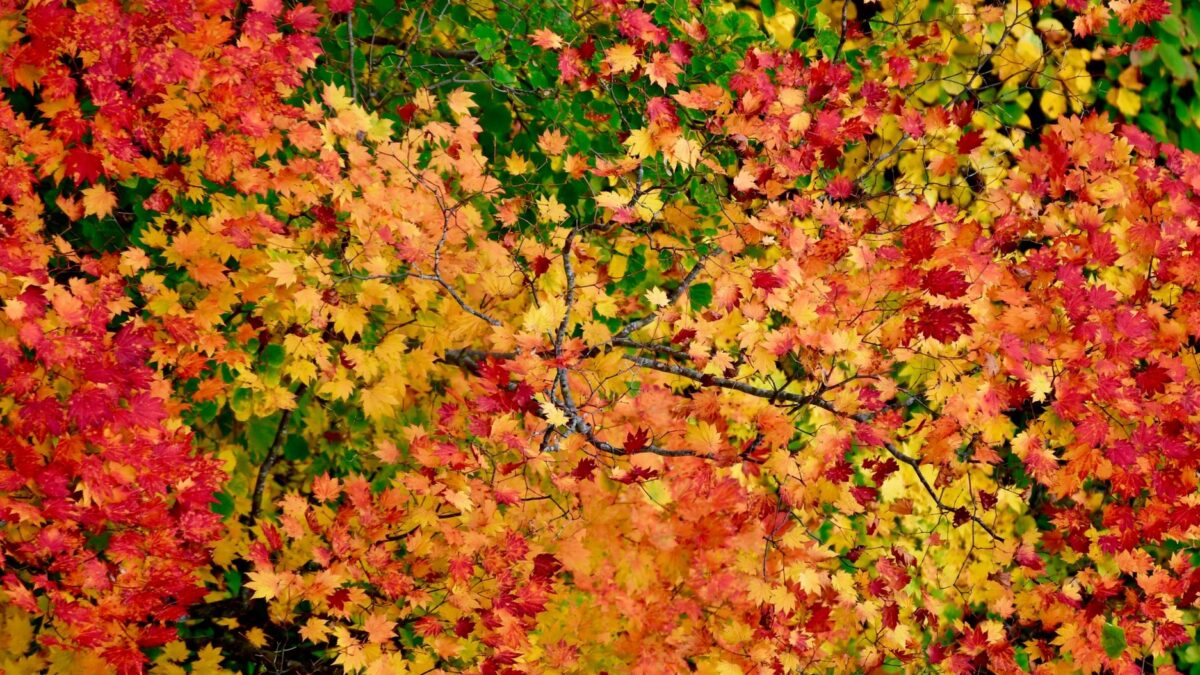
Fall foliage in the US typically peaks first in Alaska (late August to mid-September), then in the Rockies, northern New England and the upper Midwest (mid-September to early October), the central and Mid-Atlantic states (mid- to late October), and finally the South (late October to mid-November). Within one state, higher and more northern areas usually turn one to three weeks before lower and southern ones.
When does fall foliage peak in each state?
The tables give typical peak windows by state, based on long-term seasonal patterns. They are a planning guide, not a forecast: in any year, peak can arrive a week or more earlier or later. States with little fall color, such as Hawaii and most of Florida, are left out.
New England and New York
| State | Earliest areas | Typical peak window |
|---|---|---|
| Maine | North woods, western mountains | Late September (north) to mid-October (south and coast) |
| New Hampshire | White Mountains, North Country | Late September to early October (north), mid-October (south) |
| Vermont | Northeast Kingdom, high elevations | Late September (north) to mid-October (south) |
| Massachusetts | Berkshires | Early to mid-October (west), mid- to late October (east) |
| Connecticut | Northwest hills | Mid- to late October |
| Rhode Island | Northern inland areas | Mid- to late October |
| New York | Adirondacks | Late September to early October (Adirondacks), mid-October (Catskills, Finger Lakes), late October to early November (New York City) |
Mid-Atlantic and South
| State | Earliest areas | Typical peak window |
|---|---|---|
| Pennsylvania | Northern tier, Poconos | Early to mid-October (north), late October (south) |
| New Jersey | Northwest highlands | Mid-October (north), late October to early November (south) |
| Maryland and Delaware | Western Maryland mountains | Early to mid-October (west), late October (east) |
| West Virginia | High Allegheny areas | Late September to early October (high), mid- to late October (low) |
| Virginia | Blue Ridge, Shenandoah | Mid- to late October (mountains), late October to early November (east) |
| North Carolina | Peaks above 5,000 feet | Early October (high), mid- to late October (Asheville), late October to early November (Piedmont) |
| Tennessee | Great Smoky Mountains high ridges | Early to mid-October (high), late October to early November (low) |
| Kentucky | Eastern mountains | Mid- to late October |
| Georgia, South Carolina and Alabama | Northern mountains and Upstate | Late October to early November |
| Arkansas and Oklahoma | Ozark and Ouachita highlands | Late October to early November |
| Texas | Hill Country canyons, Guadalupe Mountains | Late October to mid-November |
Midwest
| State | Earliest areas | Typical peak window |
|---|---|---|
| Minnesota | Northwest and Arrowhead | Mid-September to early October (north), October (south) |
| Michigan | Upper Peninsula | Late September to early October (UP), early to mid-October (northern Lower), mid- to late October (south) |
| Wisconsin | Northwoods | Late September to early October (north), mid- to late October (south) |
| Iowa, Illinois, Indiana and Ohio | Northern counties | Mid- to late October |
| Missouri | Northern Missouri | Mid- to late October; Ozarks late October |
West and Alaska
| State | Main color | Typical peak window |
|---|---|---|
| Alaska | Birch, aspen, tundra | Late August to mid-September |
| Montana, Wyoming and Idaho | Aspen, cottonwood, larch | Mid- to late September |
| Colorado | Aspen | Mid- to late September (north), late September to early October (south) |
| Utah | Aspen, maple, oak | Late September to early October |
| New Mexico | Aspen, cottonwood | Late September to early October (aspens), late October (Rio Grande cottonwoods) |
| Arizona | Aspen, maple | Late September to early October (Flagstaff), late October to early November (Oak Creek Canyon) |
| Washington | Larch, maple | Late September to mid-October (larches), mid- to late October (west side) |
| Oregon | Maple, oak | Mid- to late October; Portland area late October to early November |
| California | Aspen, cottonwood, maple | Late September to mid-October (Eastern Sierra), late October to early November (Yosemite Valley) |
What makes fall foliage early or late?
Shorter days start the process, and the weather decides how bright the color is and how long it lasts. As nights lengthen, trees stop making chlorophyll, which lets yellow and orange pigments show; red comes from pigments the leaves produce in fall when sugars are trapped in them.
- Warm, sunny days with cool nights give the brightest color, according to the US Department of Agriculture. Cool nights that stay above freezing are ideal.
- Warm nights in September slow the change and can push peak later and leave reds duller.
- Drought stresses trees. The USDA notes it can make leaves drop early, and the Forest Service has noted that severe summer drought can also delay the onset of color; either way, dry years often bring browner, shorter seasons.
- Hard frost damages leaf cells and can end the season quickly, with leaves falling before they fully turn.
- Wind and heavy rain, including remnants of tropical storms, can strip trees in a day.
- Elevation and latitude matter most: summits and northern valleys turn first, and color moves downhill and south over several weeks.
How do you use live foliage maps and reports?
Official state reports are the most useful tool, because they come from observers in the field. Prediction maps are useful for early planning but are forecasts made in advance.
- Start with the state report. New York’s I LOVE NY foliage report is updated every Wednesday afternoon during the season. Maine, Vermont and New Hampshire also publish weekly reports, and Minnesota runs a Fall Color Finder map.
- Read the stage, not the color on the map. Reports usually describe progress as a percentage or a stage such as just starting, midpoint, near peak, peak and past peak. Near peak to peak is the target.
- Treat national prediction maps as rough estimates. They model the season months ahead and cannot account for a late heat wave or an early storm.
- Check again two or three days before you leave, and be ready to shift your route by elevation rather than cancel.
Which week should you pick if you can choose only one?
For a single, fixed-date trip, choose the week that gives you the most elevation range. In northern New England, the first two weeks of October usually catch peak color somewhere between the mountains and the valleys. In the Blue Ridge and the Smokies, aim for the second half of October. In Colorado, the second half of September is the safest bet. Peak at any one spot usually lasts around one to two weeks; Minnesota’s DNR puts it at about two weeks. For the destinations themselves, see our list of the best fall foliage destinations in the US and our New England fall foliage road trip.
Bottom line
Fall color runs from late August in Alaska to mid-November in the South, with most of the country peaking in October. Use the typical windows to choose your region, then rely on the weekly state reports to pick the exact days, and plan to move up or down in elevation if the season runs early or late. In the Smokies, where color spans more than a month, our Great Smoky Mountains guide explains which areas to visit first.
FAQ
When is peak foliage in New England?
Northern Vermont, New Hampshire and Maine typically peak from late September to early October. Southern New England and the coast usually peak from mid- to late October.
Which state has the earliest fall colors?
Alaska is first, usually from late August to mid-September. In the lower 48, high areas of Colorado, Wyoming and Montana and northern Minnesota often turn by mid-September.
Does a dry summer mean bad foliage?
Often, but not always. Drought can make leaves brown and drop early, yet a dry summer followed by sunny days and cool nights in fall can still produce good color.
How long does peak foliage last?
Peak at a single place usually lasts about one to two weeks. A whole region stays colorful longer, because color moves from high to low elevations.