Joshua Tree National Park Guide: Best Months, Top Stops and Camping
When the desert is comfortable, which stops to string together on Park Boulevard, how to get a campsite and where to sleep outside the park.
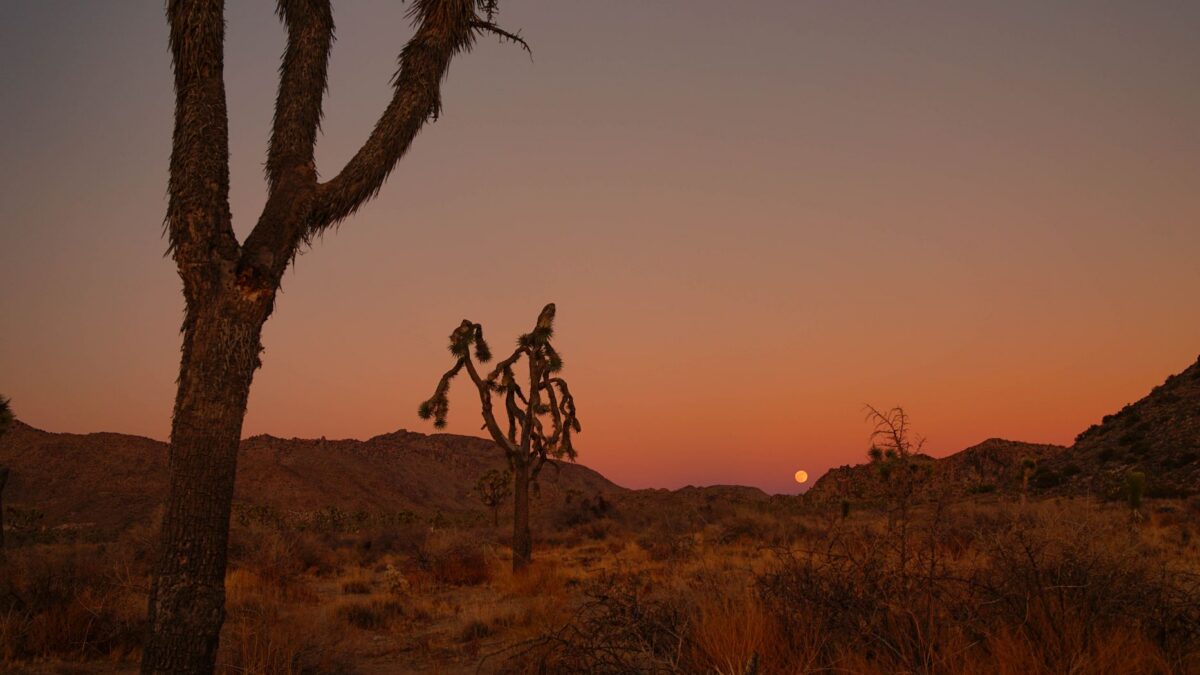
Joshua Tree National Park in Southern California is best visited from October through April, when daytime highs are mild; in summer, temperatures often pass 100°F and hiking is only safe early or late. Entry costs $30 per vehicle for 7 days as of November 2026. One full day covers the main sights, and two days add a hike, sunset and a night of stargazing.
The park spans nearly 800,000 acres where two deserts meet: the higher, cooler Mojave in the west, where the Joshua trees grow, and the lower Colorado Desert in the east. Most visitors see the Mojave side along Park Boulevard and come back for the dark skies.
When is the best time to visit Joshua Tree?
October–November and February–April are the most comfortable months. Spring is the busiest season, with wildflowers in good rain years; winter is quieter but cold at night.
| Months | Daytime conditions | Crowds | Notes |
|---|---|---|---|
| Oct–Nov | Warm days, cool nights | Moderate, busy on holidays | Good hiking and climbing weather |
| Dec–Jan | Cool days, nights near or below freezing | Lower, except holiday weeks | Occasional snow at higher spots |
| Feb–Apr | Mild to warm | Highest; full campgrounds on weekends | Wildflowers vary with winter rain |
| May–Sep | Hot; often over 100°F | Lowest | Hike before 10 a.m. or after 5 p.m. only |
How much does Joshua Tree cost to enter?
Joshua Tree charges $30 per private vehicle, $25 per motorcycle and $15 per person on foot or bike, each valid for 7 days, as of November 2026. A Joshua Tree annual pass costs $55, and the America the Beautiful pass ($80 for U.S. residents) also covers entry.
Joshua Tree is not one of the 11 parks where nonresidents age 16 and older pay the extra $100 per-person fee introduced in 2026. If you are visiting from abroad, our guide to what international visitors pay at U.S. parks explains which parks add the surcharge.
What are the top stops in Joshua Tree?
The classic route runs along Park Boulevard between the West Entrance (town of Joshua Tree) and the North Entrance (Twentynine Palms), with a detour south to Keys View and the Cholla Cactus Garden.
| Stop | What it is | Walk |
|---|---|---|
| Hidden Valley | Boulder-ringed valley with Joshua trees | 1-mile loop, easy |
| Barker Dam | Old cattle dam, sometimes holding water, with rock art nearby | About 1.1-mile loop, easy |
| Keys View | Overlook at 5,185 feet above the Coachella Valley | Short paved walk |
| Skull Rock | Roadside rock with skull-like hollows | Roadside, or a longer nature loop |
| Ryan Mountain | Summit with views across the park | 3 miles round trip, about 1,050 feet of climbing |
| Arch Rock | Granite arch near White Tank Campground | Short trail, easy |
| Cholla Cactus Garden | Dense stand of teddybear cholla in the Colorado Desert | Quarter-mile loop on a path |
Do not touch the cholla: its spines detach easily and are hard to remove. Stay on trails around desert plants, and never climb on or carve Joshua trees.
How do you stay safe in the Joshua Tree heat?
Carry at least 1 gallon (about 4 liters) of water per person per day, and more for hikes, because there is no drinking water anywhere in the park’s interior. Water is available at visitor centers, the West Entrance station and some campgrounds.
- Time your hike. In hot months, finish strenuous walks before 10 a.m. or start after 5 p.m.
- Know the warning signs. Nausea, headache, cramps, confusion and a flushed or pale face can mean heat illness. Rest in shade, cool down with water and seek help.
- Do not rely on your phone. Cell coverage is patchy; download maps and tell someone your plan.
- Fill the tank before entering; there is no fuel in the park.
- Do not leave people or pets in cars. Interiors heat up quickly even in spring.
The park’s safety guidelines page has the full list, including flash flood and rock-climbing advice.
Do you need reservations to camp in Joshua Tree?
For most sites, yes. The majority of the park’s roughly 500 campsites are booked on Recreation.gov, from the same day up to 6 months ahead, and spring weekends sell out early.
| Type | Campgrounds | How it works |
|---|---|---|
| Reservation only | Indian Cove, Black Rock, Jumbo Rocks, Ryan, Cottonwood (plus group sites) | Book on Recreation.gov up to 6 months out |
| First come, first served | Hidden Valley, Belle, White Tank | Claim an open site, then pay at an entrance station within one hour |
First-come sites are usually full by Friday afternoon on weekends. Belle and White Tank close temporarily in summer, while Hidden Valley stays open year-round. Fees vary by campground; check the park’s campgrounds page before booking. Our Recreation.gov booking guide covers release times and cancellations.
Is Joshua Tree good for stargazing?
Yes. Joshua Tree is a certified International Dark Sky Park, and on moonless nights the Milky Way is visible from much of the park. The eastern side, farther from desert towns, is generally darker than areas near the West Entrance.
- Timing: plan around the new moon; the Milky Way core is best seen on spring and summer nights.
- Where: use pullouts and parking areas; do not drive off roads or walk among plants in the dark.
- Lights: use a red light so others keep their night vision.
- Layers: desert nights get cold fast, even after a warm day.
For other places with protected skies, see our list of dark sky places for stargazing.
Where should you stay: Palm Springs or the towns next to the park?
Stay in the towns along Highway 62 for the shortest drive, or in Palm Springs for more hotels, restaurants and a pool after a hot day. Palm Springs is about an hour from the West Entrance.
| Base | Nearest entrance | Best for |
|---|---|---|
| Joshua Tree (town) | West Entrance, a few minutes away | Sunrise starts, rentals, cafes |
| Yucca Valley | West Entrance, about 15–20 minutes | More groceries and fuel |
| Twentynine Palms | North Entrance, minutes away | Quick access to Jumbo Rocks and the east side |
| Palm Springs area | West Entrance, about 1 hour; Cottonwood via I-10 | A larger resort base and airport |
From Los Angeles, the West Entrance is roughly a 2.5–3 hour drive without traffic.
Bottom line
Go between October and April, bring a gallon of water per person per day, and plan one to two days along Park Boulevard with Keys View and the Cholla Cactus Garden. Reserve a campsite up to 6 months ahead for spring, base yourself in Joshua Tree town or Twentynine Palms for early starts, and stay after dark for the stars.
FAQ
How many days do you need in Joshua Tree?
One full day covers Hidden Valley, Barker Dam, Keys View, Skull Rock and the Cholla Cactus Garden. A second day leaves time for Ryan Mountain, a slower sunset and stargazing.
Is Joshua Tree worth visiting in summer?
Only if you plan around the heat. Drive the main road, do short walks at sunrise or after 5 p.m., and stay inside an air-conditioned car or building at midday.
Can you see Joshua Tree without a car?
Not easily. There is no park shuttle, distances between stops are long, and there is no water or fuel in the park, so a car is the practical way to visit.
Does Joshua Tree require timed entry?
No. As of November 2026, Joshua Tree has no timed-entry system; you pay the entrance fee at the gate or buy a pass online.