Sedona Guide: Red Rock Pass, Best Hikes, Shuttle and Best Months
When to go, which pass you need, how the free trailhead shuttle works, the hikes worth your time and what Sedona's vortex sites actually are.
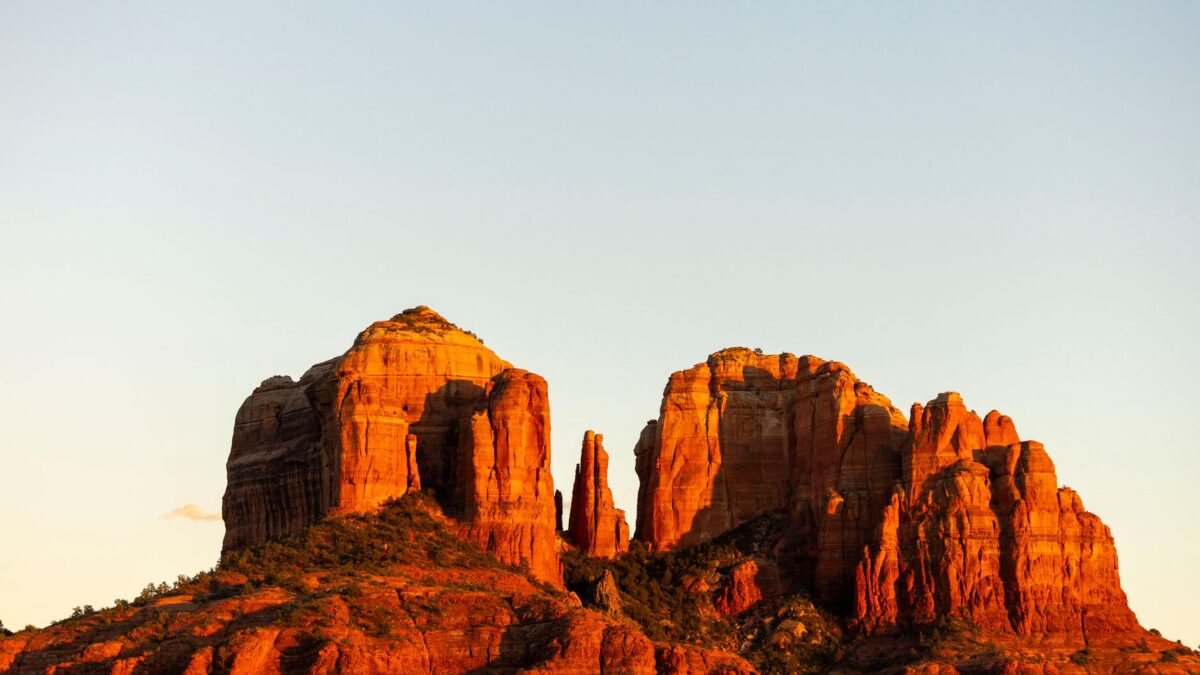
Sedona, Arizona, is best visited from March to May and from September to November, when days are warm but not hot. Most trailheads on the surrounding Coconino National Forest require a Red Rock Pass, which costs $5 a day, $15 a week or $20 a year as of November 2026, or an America the Beautiful pass. The free Sedona Shuttle reaches the busiest trailheads, including Cathedral Rock, Soldier Pass and Devil’s Bridge, typically from Thursday to Sunday.
This guide covers when to go, pass rules, the shuttle, the best hikes, Sedona’s vortex sites, Slide Rock State Park, safety and costs.
When is the best time to visit Sedona?
Spring and fall are the best seasons in Sedona, which sits at about 4,350 feet in the red rock country between Phoenix and Flagstaff. Summer is hot, and the July–September monsoon brings afternoon storms; winter is cool and quiet, with occasional snow on the rocks.
| Season | Typical weather | Crowds | Notes |
|---|---|---|---|
| March–May | Warm days, cool nights | High, especially spring break | Best hiking; shuttle often runs daily during spring break |
| June–August | Highs often in the 90s °F; monsoon storms from July | Moderate | Hike at dawn; Slide Rock and Oak Creek are busiest |
| September–November | Warm to mild, mostly dry | High on weekends | Fall color in Oak Creek Canyon, usually late October to early November |
| December–February | Cool days, cold nights, rare snow | Lower, except holidays | Cheapest lodging; good photography light |
Do you need a Red Rock Pass in Sedona?
Yes, if you park and leave your vehicle at a fee site on the Coconino National Forest, such as most trailheads and picnic areas around Sedona. You do not need one to drive through, park in town, or ride the free shuttle. According to the Forest Service Red Rock Pass page, prices as of November 2026 are:
| Pass | Price | Valid |
|---|---|---|
| Red Rock Pass, daily | $5 | One calendar day |
| Red Rock Pass, weekly | $15 | 7 consecutive days |
| Red Rock Pass, annual | $20 | 12 months |
| America the Beautiful pass | $80 per year | Accepted at most Sedona-area fee sites |
| Coconino Hospitality Annual Pass | $50 per year | Only for five concessionaire-run sites |
A handful of popular day-use areas, including Crescent Moon and Grasshopper Point, are run by a concessionaire and charge their own fees; Red Rock Passes and America the Beautiful passes are not accepted there. The West Fork of Oak Creek trailhead at Call of the Canyon is one of these. You can buy Red Rock Passes at trailhead kiosks, the Red Rock Ranger District visitor center and online.
How does the Sedona Shuttle work?
The Sedona Shuttle is a free, city-run bus to the trailheads where parking is hardest. No reservation is needed and riders do not need a Red Rock Pass. It runs from park-and-ride lots to five trailheads:
- Cathedral Rock
- Little Horse (for Chicken Point and Bell Rock area trails)
- Soldier Pass
- Dry Creek Vista (for Devil’s Bridge)
- Mescal (for Devil’s Bridge and Mescal Mountain trails)
The service has generally operated Thursday through Sunday from about 7 a.m. to 5:30 p.m., with daily service during busy periods; in 2026 it ran seven days a week from February 26 to April 26. While the shuttle runs, the Cathedral Rock and Soldier Pass trailhead lots are closed to private cars, so the shuttle is the only practical option there. Check the city’s shuttle schedule before you go, since routes and days change.
What are the best hikes in Sedona?
The best Sedona hikes for a first visit mix one iconic scramble, one classic viewpoint and one shaded canyon walk. Distances below are approximate round trips.
| Hike | Round trip | Difficulty | Highlights |
|---|---|---|---|
| Cathedral Rock | About 1.2 miles | Short but steep, with hand-and-foot scrambling | Saddle views between the spires |
| Devil’s Bridge (from Dry Creek Vista) | About 4 miles | Moderate, steep at the end | Natural sandstone arch |
| Soldier Pass | About 4.5 miles | Moderate | Devil’s Kitchen sinkhole, Seven Sacred Pools |
| Bell Rock Pathway | About 3.5 miles | Easy | Wide trail around Bell Rock and Courthouse Butte |
| Boynton Canyon | About 6 miles | Moderate | Red rock canyon and a vortex viewpoint |
| West Fork of Oak Creek | About 6.5 miles | Easy to moderate, with creek crossings | Shaded canyon, superb fall color |
| Airport Mesa Loop | About 3.3 miles | Moderate | 360-degree views over town |
Devil’s Bridge is the most crowded hike; expect a line for photos on the arch. Go at sunrise or on a weekday.
How do you stay safe hiking in Sedona?
- Start early in warm months, and finish exposed hikes before midday.
- Carry more water than you think you need, plus salty snacks and sun protection. Read the National Weather Service heat safety advice.
- In monsoon season, watch the sky. Leave washes and creek beds if storms build upstream, and get off exposed ridges when you hear thunder.
- On scrambles such as Cathedral Rock, wear shoes with good grip and turn back if a section feels unsafe.
- Download maps before you go; cell service is patchy in some canyons.
What are Sedona’s vortex sites?
Sedona’s vortexes are spots that some visitors describe as having a special spiritual or energizing quality. There is no scientific evidence of a measurable energy field at these sites, but they are also some of the best viewpoints in the area, so they are worth visiting either way. The four most often named are:
- Airport Mesa: the easiest to reach, with views over West Sedona.
- Bell Rock: right off Highway 179, with easy trails around its base.
- Cathedral Rock: a steep climb to a saddle between spires.
- Boynton Canyon: a longer canyon hike with a viewpoint ridge.
Whatever your reason for visiting, stay on marked trails, do not stack rocks or build cairns, and never touch or mark rock art at heritage sites.
Is Slide Rock State Park worth visiting?
Slide Rock is worth it on a hot day if you arrive early. The park, about 7 miles north of town in Oak Creek Canyon, has a natural sandstone chute where the creek forms a water slide. According to Arizona State Parks, vehicle fees vary by season: about $20–$30 per vehicle in summer, depending on the day, and about $10–$20 the rest of the year, as of November 2026. Check the Slide Rock State Park page for current rates.
Since May 1, 2026, cars may no longer wait on Highway 89A when the lot is full; the entrance simply closes until spaces open. On summer weekends, arrive at the 8 a.m. opening. Water quality is tested regularly, and swimming can close when bacteria levels are high.
How much does a Sedona trip cost?
Sedona’s outdoor fees are low, but lodging is expensive. Central Sedona and resort properties command the highest rates; the Village of Oak Creek, Cottonwood and Camp Verde, all within roughly 15–30 minutes, are usually cheaper.
| Item | Cost as of November 2026 |
|---|---|
| Red Rock Pass | $5 daily, $15 weekly, $20 annual |
| Sedona Shuttle | Free |
| Slide Rock State Park | About $10–$30 per vehicle, by season and day |
| Concessionaire day-use sites | Separate fee; Red Rock Pass not accepted |
| Guided jeep tours | Priced per person; book ahead for weekends |
Bottom line
Visit Sedona in spring or fall, buy a Red Rock Pass or bring an America the Beautiful pass, and use the free shuttle for Cathedral Rock, Soldier Pass and Devil’s Bridge. Plan one sunrise hike, one easy viewpoint and a cool canyon walk in Oak Creek. Sedona fits neatly into a longer trip; see our 10-day Southwest road trip, which continues to the Grand Canyon.
FAQ
How many days do you need in Sedona?
Two full days cover the highlights: two or three hikes, a scenic drive and Slide Rock or Oak Creek. Three to four days allow longer hikes and a day trip to the Grand Canyon, about two hours away; our guide to the best time to visit the Grand Canyon helps you pair them.
Is the Red Rock Pass needed in town?
No. The pass is required only when you park and leave your car at a fee site on the national forest, such as trailheads. Parking in town and riding the shuttle do not require it.
Can you drive to Devil’s Bridge?
Only partway. The dirt road beyond the Dry Creek Vista trailhead is rough and suited to high-clearance vehicles, so most hikers take the shuttle or park at Dry Creek Vista or Mescal and walk.
Is the America the Beautiful pass worth it for Sedona?
It is if you will also visit national parks such as the Grand Canyon in the same year. For Sedona alone, a weekly Red Rock Pass is cheaper; compare in our guide to whether the America the Beautiful pass is worth it.