Washington, DC in 3 Days: Monuments, Smithsonian and Day Trips
Washington, DC in 3 days: one day for the National Mall monuments, one for free Smithsonian museums and the Capitol, and one for an easy day trip.
Three days in Washington, DC is enough to see the main monuments on the National Mall, spend a full day in the free Smithsonian museums with a tour of the U.S. Capitol, and take one day trip to Mount Vernon, Old Town Alexandria or Annapolis. The plan below puts the outdoor monuments on day one, the Capitol and museums on day two, and the day trip on day three. Most of it can be done on foot and by Metro, without a car.
How should you plan 3 days in Washington, DC?
Group sights by area, because the National Mall is about 2 miles (3 km) long from the Capitol to the Lincoln Memorial, and walking it end to end and back takes most of a day. A workable split:
- Day 1: monuments and memorials, from the Washington Monument west to the Lincoln Memorial and around the Tidal Basin.
- Day 2: the Capitol, the Library of Congress and two or three Smithsonian museums on the east side of the Mall.
- Day 3: a day trip, or the White House area, Georgetown and Arlington National Cemetery if you would rather stay in the city.
Book anything that needs a reservation before you arrive. The Capitol tour, the Washington Monument elevator and the busiest museums can fill up weeks ahead in spring and summer. If you are coming from New York, the 5-day New York and Washington DC itinerary by train shows how to fit both cities into one trip.
What should you see on day 1 at the monuments?
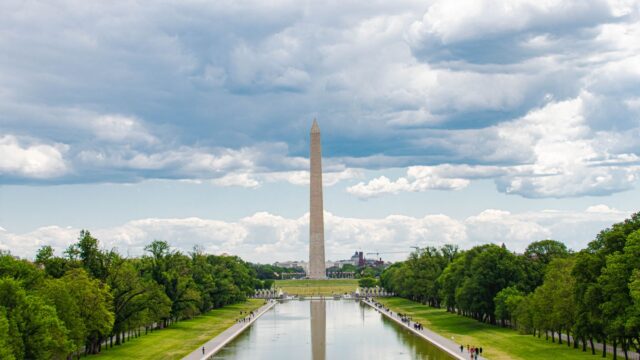
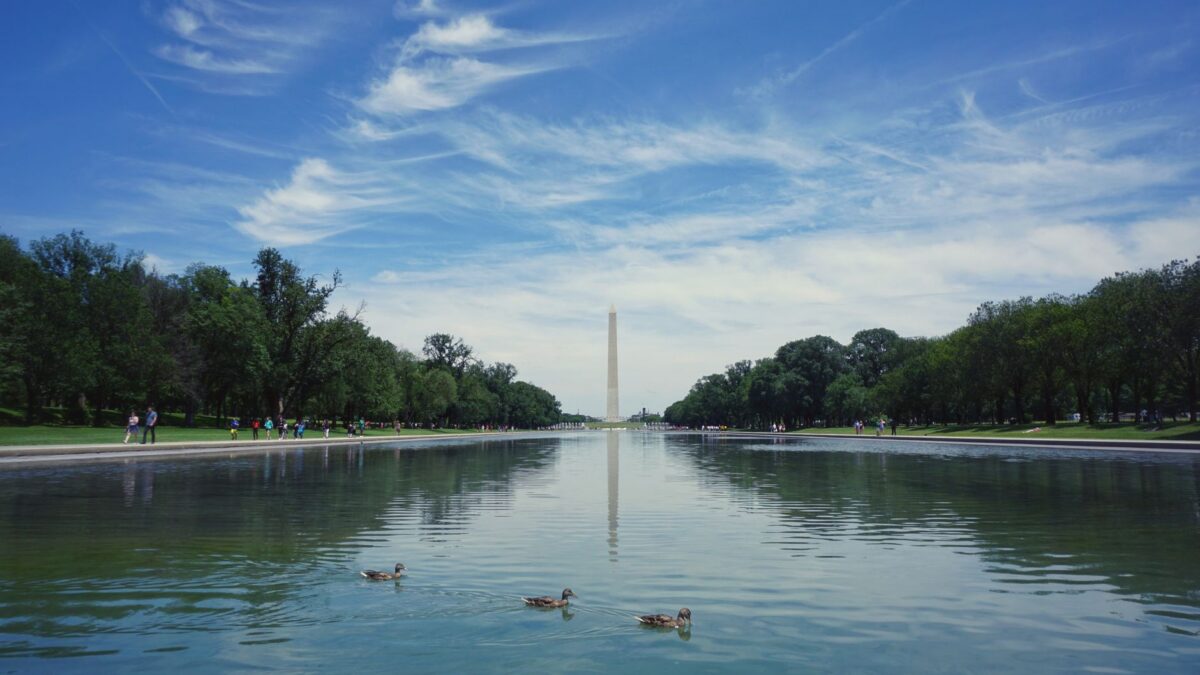
Start at the Washington Monument in the morning, then walk west past the World War II Memorial and along the Reflecting Pool to the Lincoln Memorial. The Vietnam Veterans Memorial and the Korean War Veterans Memorial sit on either side of the Lincoln Memorial. From there, walk south to the Tidal Basin for the Martin Luther King Jr. Memorial, the Franklin Delano Roosevelt Memorial and the Thomas Jefferson Memorial.
- The Washington Monument elevator to the observation level uses timed tickets; reserve ahead in busy months.
- The memorials are open to visitors around the clock, and many people return after dark, when they are lit and much less crowded.
- Expect 4 to 6 miles (6 to 10 km) of walking. Wear comfortable shoes and carry water in summer, when the city is hot and humid.
The National Park Service manages the National Mall and Memorial Parks and posts closures, ranger programs and hours on its site.
How do you visit the Capitol and the Smithsonian on day 2?
Begin with a guided tour of the U.S. Capitol, which is free. Reserve it online through the U.S. Capitol Visitor Center or ask your representative’s or senator’s office to arrange one. Tours start at the Capitol Visitor Center, and security screening means you should arrive early and bring as little as possible.
An underground tunnel connects the Capitol Visitor Center to the Library of Congress Thomas Jefferson Building, whose Great Hall and Main Reading Room overlook are open to the public. The Supreme Court is across the street.
Spend the afternoon at the Smithsonian. Admission is free at all Smithsonian museums on the Mall. Popular choices:
- National Air and Space Museum, with aircraft and spacecraft from the Wright brothers to the Apollo missions.
- National Museum of Natural History, home of the Hope Diamond and the dinosaur hall.
- National Museum of American History, which holds the Star-Spangled Banner flag.
- National Museum of African American History and Culture, which has used free timed-entry passes at busy times.
Pick two or three and give each about two hours. Check entry rules and hours on the Smithsonian Institution site before you go, since some museums require free passes and schedules change. The National Gallery of Art, on the same side of the Mall, is also free, though it is not part of the Smithsonian. The National Archives, a few blocks north, displays the Declaration of Independence, the Constitution and the Bill of Rights.
What are the easiest day trips from Washington, DC?
The easiest day trips are within an hour of downtown and need little planning:
- Mount Vernon: George Washington’s estate on the Potomac River in Virginia, about 15 miles (24 km) south. Drive, take a tour bus, or ride a bike along the Mount Vernon Trail. Admission is paid.
- Old Town Alexandria: brick sidewalks, shops and a waterfront on the Potomac, reached by Metro to King Street station or by water taxi in season.
- Annapolis: Maryland’s capital and home of the U.S. Naval Academy, about an hour’s drive east, with a historic harbor district.
- Harpers Ferry: a national historical park in West Virginia where two rivers meet, about 1.5 hours by car, with weekday commuter trains on some days.
Arlington National Cemetery, across the river and one Metro stop from downtown, fits into a half day if you prefer to stay close. If you drive to any of these, the road trip gas cost calculator estimates fuel for the round trip.
How do you get around Washington, DC?
Walking and the Metro cover almost everything on this itinerary. The Smithsonian, Federal Triangle, Capitol South and Arlington Cemetery stations serve the main sights, and a contactless payment card or a SmarTrip card works for fares. Parking near the Mall is limited and expensive, so skip the car on days one and two. Capital Bikeshare and Metrobus are other options around the Mall.
When is the best time to visit Washington, DC?
Spring and fall are the most comfortable seasons. The cherry blossoms around the Tidal Basin usually bloom in late March or early April and bring the biggest crowds of the year. Summer is hot and humid, with long museum lines. Fall brings mild weather and fewer school groups, though Thanksgiving week traffic around the city is heavy; see the worst Thanksgiving traffic days and drive times before planning a road trip that week. Winter is the quietest and cheapest time for hotels, and the museums stay open.
Quick answers
Are the Smithsonian museums really free?
Yes. All Smithsonian museums in Washington, DC charge no admission. Some, such as the National Museum of African American History and Culture, may require free timed passes at busy times.
Can you go inside the Capitol without a tour?
The Capitol Visitor Center exhibits are open to visitors, but entry to the historic building is by guided tour. Watching Congress from the galleries requires a pass from a representative’s or senator’s office.
Is 3 days enough for Washington, DC?
Three days covers the monuments, the Capitol, several museums and one day trip. Add a fourth day for more museums or a second trip out of the city.